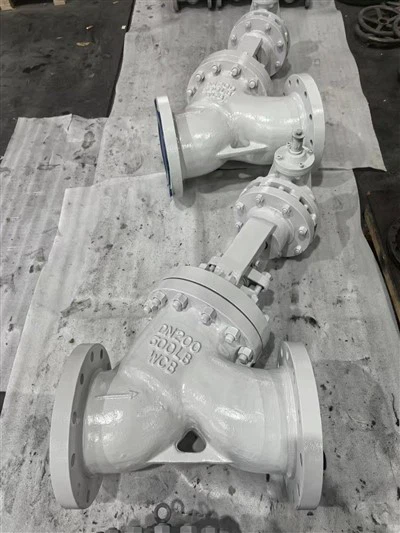
Zhejiang PORO Valve Manufacturing Co., Ltd , established in 1997 with oversea's investment, covered an area of 23186 square meters, is a leading manufacturer & sales in China. Today PORO valve has been widely used in domestic and international large-scale petroleum, chemical, electric power, iron and steel, shipbuilding, water treatment and other fields.
-
![Concentric Butterfly Valve]() Concentric Butterfly ValveThe concentric butterfly valve is a common valve type, widely used in various fluid control systems.view more
Concentric Butterfly ValveThe concentric butterfly valve is a common valve type, widely used in various fluid control systems.view more -
![Double Eccentric Butterfly Valve]() Double Eccentric Butterfly ValveDouble eccentric butterfly valve is a high-performance fluid control equipment, widely used in petroleum, chemical, water treatment, power and other industries.view more
Double Eccentric Butterfly ValveDouble eccentric butterfly valve is a high-performance fluid control equipment, widely used in petroleum, chemical, water treatment, power and other industries.view more -
![Triple-Offset Butterfly Valve]() Triple-Offset Butterfly ValveThe valve shaft deviates from the center of the sealing surface, reducing friction during opening and closing and extending the life of the valve.view more
Triple-Offset Butterfly ValveThe valve shaft deviates from the center of the sealing surface, reducing friction during opening and closing and extending the life of the valve.view more -
![Hard-On-Hard Sealing Butterfly Valve]() Hard-On-Hard Sealing Butterfly ValveThe Hard-on-hard sealing butterfly valve is a high-performance valve designed for harsh working conditions and is widely used in the petroleum, chemical, electric power, water treatment and other industries.view more
Hard-On-Hard Sealing Butterfly ValveThe Hard-on-hard sealing butterfly valve is a high-performance valve designed for harsh working conditions and is widely used in the petroleum, chemical, electric power, water treatment and other industries.view more


Why Choose Us
Our Product
Gate valve, Globe valve, Check valve, Ball valve, Butterfly valve and slab gate valve etc. are our products range covered different materials of CS, LTCS, SS, DSS, ALLOY S etc. and standards of ANSI, DIN, BS, JIS, and GB etc.
Quality Assurance
We have 100% quality guarantee to customers. We will be responsible for any quality problem.
Production Market
PORO's products are exported to ASEAN, Europe, South America, Middle East, Africa and so on. In the past, the annual business volume was as high as 40 million RMB.
Rich Experience
Since the establishment of the company, we have focused on production. Our company has many years of production work experience. The concept of customer-oriented and win-win cooperation makes the company more mature and stronger.
Lightweight and Compact
Butterfly valves are great for several applications because they are very lightweight and provide reasonable flow control in a compact design. The butterfly disc takes up little space but offers enough strength for most pump systems.
Simple and Cost Effective
Butterfly valves are very simple in design and have minimal maintenance requirements. They are easy to install and operate. Plus, they are typically much less expensive than a ball valve of the same size. They do not require much torque to operate effectively and can be automated for energy-efficient operation.
Quick and Efficient
The 90-degree turning radius allows for quick sealing upon actuation, which provides more accurate flow control with minimal effort to turn the valve on and off. Different butterfly valves are to consider, including zero-offset, double-offset, and triple-offset.
Pressure Control
In addition to precision flow control, butterfly valves are excellent for pressure control. They experience minimal pressure drop during operation before the fluids recover energy quickly after leaving the valve. This keeps the pump system running efficiently with consistent fluid pressures.
Low Maintenance Requirements
Butterfly valves have few internal components, and simple constructions ensure that few parts interfere, resulting in fewer breakdowns. The valves do not have pockets that trap debris and dirt in water and wastewater.
Application of Butterfly Valve


Oil and gas industry
The oil and gas industry deals with fluids that are often under high pressure and are volatile. Reliable and efficient flow control is vital to ensure safe operations. Butterfly valves are extensively used in this industry due to their ease of operation and reliable sealing capabilities. They are used in various stages, including extraction, processing, transport, and storage.
Chemical industry
The chemical industry involves the use of a wide range of substances, including both corrosive and non-corrosive fluids. Butterfly valves are a common choice in this industry because they can be designed with materials resistant to chemical corrosion, making them suitable for controlling the flow of such substances. For instance, in the manufacturing of synthetic materials like plastics or rubber, butterfly valves can regulate the flow of raw materials into reaction vessels.
Water and wastewater treatment plants
Water and wastewater treatment plants handle large volumes of water and require precise flow control for their day-to-day operations. Butterfly valves are used in various stages of water treatment. They control the flow of water into treatment tanks and regulate the release of treated water into the distribution system. In wastewater treatment, they manage the flow of wastewater into treatment ponds and control the discharge of treated water.
HVAC systems
In heating, ventilation, and air conditioning (HVAC) systems, butterfly valves play a pivotal role in managing the flow of cooling or heating medium (water or air). For example, in large commercial buildings, butterfly valves are used to control the flow of chilled or hot water in the HVAC system, thereby regulating the building's temperature.
Fire protection systems
Fire sprinkler systems are an essential part of any building's safety measures. Butterfly valves are used in these systems to manage the flow of water to the sprinklers. They ensure a quick and efficient water flow when required, contributing significantly to property and life protection during emergencies.
Technical Parameters
|
Caliber range |
DN50-DN2000 |
|
Pressure level |
PN10-PN160 |
|
Temperature range |
-46°C to 600°C |
|
Valve body material |
Cast iron, carbon steel, stainless steel, alloy steel, etc. |
|
Sealing material |
EPDM, NBR, PTFE, metal seal, etc. |
|
Connection method |
Clamp type, flange type, welding type |

Valve body: The body of the Butterfly valves fits within two pipe flanges, the most common body design is lug and wafer type.
Valve Disc: The disc is the component of the valve that controls the flow. For improving flow, sealing, and operation, there is a variation of design and orientation
Valve Stem: The stem of the butterfly valve consists of a one-piece or two-piece shaft design. Stem design shall prevent galling potential between similar corrosion-resistant materials.
Butterfly valve Seat: To provide shutoff, the seat of a butterfly valve utilizes an interference fit between the disk edge and the seat. The seat may be bonded, pressed, or locked into the body.
Actuator: Mechanism responsible for operating the valve (manual, electric, pneumatic, or hydraulic).
Types of Butterfly Valve
Concentric Valve
Common type with centered stem and disc, suitable for general-purpose applications.
Double Offset Valve
Features offset stem and seat for tighter sealing, ideal for high-pressure and high-temperature applications.
Triple Offset Valve
Incorporates three offsets for bubble-tight shut-off, used in critical applications like high-pressure steam and gas.
Resilient-Seated Valve
Soft-seat design for bubble-tight shut-off, commonly used in water treatment and HVAC systems.
High-Performance Valve
Designed for demanding applications with metal seats and high-grade materials.
Lug Style Valve
Features threaded inserts for easy installation between flanges, suitable for frequent maintenance.
Wafer Style Valve
Compact and lightweight design for easy installation between flanges in tight spaces.
Flanged Valve
Direct connection to pipelines with flanged ends, available in various pressure classes and sizes.
Packaging and Shipping


Our Certificates

FAQ
As one of the leading butterfly valve manufacturers and suppliers in China, we warmly welcome you to buy high quality butterfly valve made in China here from our factory. For customized service, contact us now.
aluminum butterfly valves, triple offset butterfly valves, pp butterfly valves