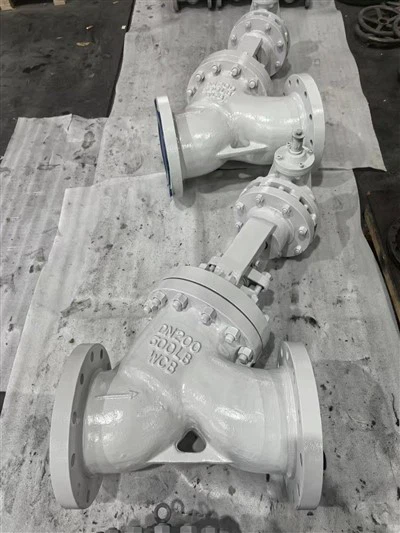
Zhejiang PORO Valve Manufacturing Co., Ltd , established in 1997 with oversea's investment, covered an area of 23186 square meters, is a leading manufacturer & sales in China. Today PORO valve has been widely used in domestic and international large-scale petroleum, chemical, electric power, iron and steel, shipbuilding, water treatment and other fields.
-
![Wedge Disc Gate Valve]() Wedge Disc Gate ValveIn industrial pipeline systems, wedge gate valves are ideal for high pressure and high temperature conditions with their unique structural design and excellent performance.view more
Wedge Disc Gate ValveIn industrial pipeline systems, wedge gate valves are ideal for high pressure and high temperature conditions with their unique structural design and excellent performance.view more -
![Solid Disc Gate Valve]() Solid Disc Gate ValveSolid disc gate valve is a common shutoff valve, widely used in petroleum, chemical, electric power, water treatment and other industries. Its main function is to control the flow and cutoff of the medium by lifting and lowering the gate.view more
Solid Disc Gate ValveSolid disc gate valve is a common shutoff valve, widely used in petroleum, chemical, electric power, water treatment and other industries. Its main function is to control the flow and cutoff of the medium by lifting and lowering the gate.view more -
![Slab Gate Valve]() Slab Gate ValveThe Slab gate valve is a common shutoff valve, widely used in the oil, gas, chemical, water treatment and other industries. Its main function is to control the flow and cutoff of the medium by moving the flat gate up and down.view more
Slab Gate ValveThe Slab gate valve is a common shutoff valve, widely used in the oil, gas, chemical, water treatment and other industries. Its main function is to control the flow and cutoff of the medium by moving the flat gate up and down.view more


Why Choose Us
Our Product
Gate valve, Globe valve, Check valve, Ball valve, Butterfly valve and slab gate valve etc. are our products range covered different materials of CS, LTCS, SS, DSS, ALLOY S etc. and standards of ANSI, DIN, BS, JIS, and GB etc.
Quality Assurance
We have 100% quality guarantee to customers. We will be responsible for any quality problem.
Production Market
PORO's products are exported to ASEAN, Europe, South America, Middle East, Africa and so on. In the past, the annual business volume was as high as 40 million RMB.
Rich Experience
Since the establishment of the company, we have focused on production. Our company has many years of production work experience. The concept of customer-oriented and win-win cooperation makes the company more mature and stronger.
Gate Valves Have Low Fluid Resistance
The gate valve’s body is a straight-through shape that does not alter the flow direction, allowing fluid to pass through the valve (when in the fully open position) with minimal resistance compared to other types of valves.
Gate Valves Provide Superior Sealing Performance
Gate valves provide better sealing performance than shut-off valves. The gate valve’s opening and closing mechanisms are faster and more convenient than those of the shut-off valve.
Gate Valves Have a Wide Application Range
Gate valves are extremely versatile and can be used in applications with mediums like steam, oil, and other media. Plus, gate valves can be used in mediums containing granular solids and with high viscosity. It can also be used as a venting valve and a low vacuum system valve.


Gate Valves are Bidirectional
Gate valves have dual flow directions. They’re not limited to one-way flow, nor are they subject to the flow directions of the medium. Therefore, gate valves are suitable for use in pipelines where the flow direction may change. Plus, they are easier to install than other more sophisticated types of valves.
Minimal Erosion
In comparison to other valve options, gate valves typically experience less erosion on their sealing surface when they are fully open. This minimal erosion is largely attributed to the valve’s tight seal functioning.
Full Port Design
Many gate valves are full-port, meaning the opening in the gate matches the diameter of the pipeline. This feature ensures that the valve does not restrict the flow when open, maintaining the pipeline’s full capacity.
Application of Gate Valve
Water Treatment
Water treatment plants rely on gate valves for the simple reason that they work well with water. Here, gate valves start or stop water flow during treatment processes.When a valve is open, water moves freely. When closed, it halts, allowing maintenance or controlling the water’s journey through the treatment stages.
Energy and Power Provision
In the energy sector, gate valves take on a pivotal role. They are often found in oil and gas pipelines, controlling the movement of these high-value resources.The oil and gas industry demands that valves can handle not just the flow but also the pressure and the corrosive nature of the media they’re dealing with. Gate valves meet this challenge with their robust construction and reliable sealing capabilities.
Manufacturing
In manufacturing, whether food and beverage, pharmaceuticals, or automotive production, controlling the flow of liquids and gases is part of the daily operation. Gate valves fit perfectly into systems where a complete cessation of flow is required to ensure quality and safety during production runs.
HVAC
Heating, ventilation, and air conditioning systems (HVAC) utilize gate valves to control heating and cooling fluids. The gate valve’s ability to operate without causing significant pressure drop is a preferred choice in these systems for keeping our environments comfortable.
Marine Marvels
On the high seas, gate valves are unsung heroes in the marine industry. They manage the flow of seawaseawater flownes, ballasting, and even fire protection systems on ships. The valves must resist corrosion from salty water, a testament to the versatility in materials and design that gate valves offer.
Fire Protection System
In fire protection systems, the ability to control water flow swiftly and decisively can be the difference between a minor incident and a major disaster. Gate valves ensure that water reaches the right places at the correct times, which makes them invaluable in this high-stakes industry.
Agricultural Applications
The agricultural industry uses gate valves in irrigation systems. They help regulate water supply to fields and ensure crops receive the right amount of water without waste, a critical factor in sustainable agriculture.
Types of Gate Valve
Some categories for classifying types of gate valves are actuation method, stem, seating, and wedge.
Manual gate valve opening and closing the valve is achieved by manually turning the handwheel. On-site operation is required.
Pneumatic gate valve compressed air spins the stem, lowering and raising the gate. Remote operation is possible.
Electric gate valve – An electric motor replaces the handwheel in the lowering and raising of the gate. Remote operation is possible.
Rising Stem valves are fixed to the gate. The stem rises and falls as the valve is opened and closed. These valves require more operation space and are not suitable for buried installations.
Non-rising stem valves are threaded to the gate. The stem does not rise and fall as the valve is opened and closed.
Metal seat – A wedge slides to a groove within the invert of the valve body. The groove often traps solids in the fluid, making them lose their ability to be drop-tight over time.
Resilient seat a wedge, usually made of ductile iron, encapsulated in elastomer material that provides a tight seal between the rim and valve body.
Parallel gate valve uses a flat gate fitting between a pair of parallel seats. The knife gate valve is of this type and is typically self-cleaning with each passage of the seat rings during opening and closing.
Wedge gate valve uses two inclined seats and a slightly asymmetric inclined gate. They have higher durability due to less wear on the seats. Water distribution systems mostly use this valve.
Components of Gate Valve

Valve Body
The body of a gate valve is its main structural component, providing the casing that houses the internal parts. It is designed to withstand high pressures and is often made from materials like cast iron, stainless steel, or brass, depending on the fluid medium and application. The body serves as the foundation for the valve, ensuring that all internal parts are securely housed and function properly.
Stem
The stem is a threaded rod that connects the actuator (whether manual, pneumatic, or electric) to the gate. It is responsible for transmitting the operator’s movement to the gate, raising or lowering it as needed. The stem can either be a rising or non-rising type. In a rising stem valve, the stem moves upward when the valve is opened, providing a visual indicator of the valve’s status. Non-rising stems are often used in applications where space is limited.
Bonnet
The bonnet is the cover that seals the valve body and houses the stem. It plays an essential role in preventing leakage and allowing easy maintenance. The bonnet is usually bolted or threaded onto the body and is removable for repairs or replacements.
Seat
The valve seat is the sealing surface where the gate meets to shut off the flow. It is designed to form a tight seal to prevent any leakage when the valve is closed. Seats can be made of materials such as rubber, metal, or elastomers like PTFE, chosen based on the operational environment and the type of fluid being handled.
Wedge (Optional)
Some gate valves feature a wedge-shaped gate, which can be solid or flexible. The wedge design allows the gate to adjust and conform to the seat surface, providing a better seal, especially in valves subjected to irregular or high-pressure conditions. A flexible wedge allows for some movement to accommodate imperfections or misalignments in the seat, whereas a solid wedge provides a more rigid seal but may require greater effort to operate.
Stem Packing
The stem packing is the material that seals around the stem to prevent leaks along the stem’s movement. It typically consists of layers of packing material like PTFE, graphite, or other resilient substances.
Gland Flange
The gland flange is a component that secures the stem packing in place. It is typically bolted onto the bonnet and can be adjusted to apply pressure to the packing, ensuring a proper seal. It is crucial in preventing leakage from the stem area and maintaining the integrity of the valve’s operation.
Backseat
The backseat is a feature found in many gate valves that helps facilitate maintenance without requiring system depressurization. It provides a secondary sealing surface, often used to prevent leakage when the valve is open, allowing for the replacement of stem packing while the valve is still in operation. This feature helps in reducing downtime for valve servicing and ensures more efficient operations.
Actuator (Handwheel or Motorized)
The actuator is the external mechanism that controls the opening and closing of the valve. In smaller valves, a handwheel is often used, while larger valves may employ electric, pneumatic, or hydraulic actuators. These devices provide the necessary force to move the gate via the stem, either manually or automatically, depending on the application requirements.
Packaging and Shipping


Our Certificates

FAQ
As one of the leading gate valve manufacturers and suppliers in China, we warmly welcome you to buy high quality gate valve made in China here from our factory. For customized service, contact us now.
pharmaceutical valve, backpressure valve, valve weight