Zhejiang PORO Valve Manufacturing Co., Ltd , established in 1997 with oversea's investment, covered an area of 23186 square meters, is a leading manufacturer & sales in China. Today PORO valve has been widely used in domestic and international large-scale petroleum, chemical, electric power, iron and steel, shipbuilding, water treatment and other fields.
-
![Cryogenic Gate Valve]() Cryogenic Gate ValveCryogenic Gate Valve is a valve specially used for extremely low temperature working conditions, usually used for the control and cut-off of media such as liquefied natural gas (LNG), liquid nitrogen, liquid oxygen, and liquid argon.view more
Cryogenic Gate ValveCryogenic Gate Valve is a valve specially used for extremely low temperature working conditions, usually used for the control and cut-off of media such as liquefied natural gas (LNG), liquid nitrogen, liquid oxygen, and liquid argon.view more -
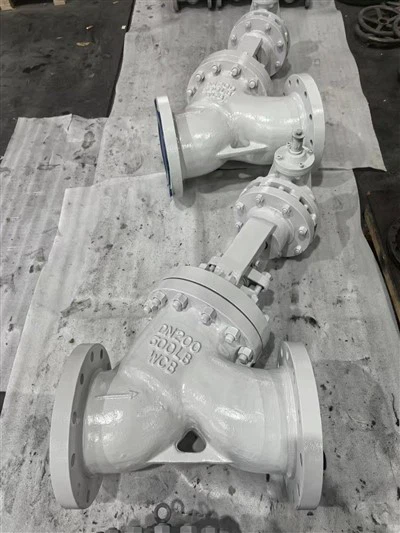
![Cryogenic Globe Valve]() Cryogenic Globe ValveCryogenic Globe Valve body and key components: use low temperature resistant materials, such as stainless steel (304, 316L) or low temperature alloy steel, to ensure high strength and toughness at extremely low temperatures.view more
Cryogenic Globe ValveCryogenic Globe Valve body and key components: use low temperature resistant materials, such as stainless steel (304, 316L) or low temperature alloy steel, to ensure high strength and toughness at extremely low temperatures.view more -
![Cryogenic Check Valve]() Cryogenic Check ValveCryogenic Check Valves and Normal check valves have significant differences in design and performance, mainly reflected in material selection, structural design, sealing performance, manufacturing process and applicable working conditions.view more
Cryogenic Check ValveCryogenic Check Valves and Normal check valves have significant differences in design and performance, mainly reflected in material selection, structural design, sealing performance, manufacturing process and applicable working conditions.view more -
![Cryogenic Ball Valve]() Cryogenic Ball ValveCryogenic Ball Valve is a high-performance valve type designed for extremely low temperature working conditions. It is generally used for the control and emergency shut-off of liquefied natural gas (LNG), liquid nitrogen, liquid oxygen,...view more
Cryogenic Ball ValveCryogenic Ball Valve is a high-performance valve type designed for extremely low temperature working conditions. It is generally used for the control and emergency shut-off of liquefied natural gas (LNG), liquid nitrogen, liquid oxygen,...view more


Why Choose Us
Our Product
Gate valve, Globe valve, Check valve, Ball valve, Butterfly valve and slab gate valve etc. are our products range covered different materials of CS, LTCS, SS, DSS, ALLOY S etc. and standards of ANSI, DIN, BS, JIS, and GB etc.
Quality Assurance
We have 100% quality guarantee to customers. We will be responsible for any quality problem.
Production Market
PORO's products are exported to ASEAN, Europe, South America, Middle East, Africa and so on. In the past, the annual business volume was as high as 40 million RMB.
Rich Experience
Since the establishment of the company, we have focused on production. Our company has many years of production work experience. The concept of customer-oriented and win-win cooperation makes the company more mature and stronger.
Leakage Prevention
Cryogenic valves are constructed with materials and seals specifically chosen to minimize leakage of cryogenic fluids. This ensures the safety and efficiency of cryogenic systems, preventing loss of valuable gases and potential hazards.
Reliability
Cryogenic valves are engineered for reliability and durability in demanding cryogenic applications. They are built to withstand thermal stresses and maintain functionality over extended periods.
Safety
The most obvious benefit is safety. Cryogenic gasses are extremely sensitive to temperature. While it may seem like they won't cause any problems for normal valves, they can do serious damage to piping and equipment. Standard valves don't handle cryogenic gas conditions well and can break under extreme temperatures. Because of this, cryogenic valves are designed to handle the coldest gasses safely.
Handling high pressure drops
Cryogenic valves can be used for high-pressure drops and are also available in large sizes. Because they handle high-pressure drops and can be sized to meet your needs, cryogenic valves can be a good choice in up-scaled process plants. Cryogenic valves can also be used in applications that involve cavitation and damage caused by high pressures.
Simple structure
The bidirectional floating ball valve is another advantage of a cryogenic valve. Unlike other types, this valve is smaller and less complicated, which can help lower your overall system costs. This is why the bidirectional cryogenic valve is so popular in LNG applications. Its bidirectional design allows it to seal in both directions and maintain full-rate pressures. When empty, it develops back pressure on the downstream side, allowing you to shut off the gas without causing any damage to the valve.
Oil and gas industry
Cryogenic valves are used to control liquefied gases such as liquid nitrogen, methane, and helium. Due to the ease and safety of non-pressurized storage and transportation, these elements are cooled to cryogenic temperatures, so they remain in a liquid state. As a result, larger volumes can be transported or stored for some time, while the piping system operates at much lower pressure levels. Before cooling these gases into liquid, it is necessary to remove condensate, moisture, CO2, and H2S to avoid downstream corrosion problems.
Food and beverage industry
Cryogenic valves are widely used in factories that deal with processed foods and beverages. These items are transferred to and from a freezer using cryogenic pipes and valves.
Air separation plants
Different gases in the air are separated using various pressure techniques. Cryogenic valves are widely used in such plants.


Steel production plants
Cryogenic valves and accompanying equipment are commonly found.
Medical/laboratory industry
The scope of cryogenic valves is constantly expanding and they are even used in the medical industry. They can be found in pipes that transmit gases such as oxygen and also in storage spaces that house medical instruments. Another area of use is in freezing biotechnological products such as vaccines.
Chemical and petrochemical plants
Cryogenic valves are used in chemical and petrochemical plants to control the flow of cryogenic gases such as nitrogen, oxygen and helium. These gases are used in processes such as cleaning, feeding and cooling, and their low temperatures and high pressures require special valves.
Aerospace industry
In the aerospace industry, cryogenic fuels have gained wide acceptance over the years. Liquid hydrogen and liquid oxygen often serve as propellants for space shuttles, either alone or in combination with aircraft fuel. The presence of cryogenic valves is a necessity in such systems.
Types of Cryogenic Valve
Cryogenic Ball Valves
As understood by the name, this valve has a ball and includes a Polytetrafluoroethylene body. These feature better flow characteristics than the globe valves. They perform excellently when a tight shut-off is needed in multiple applications.
01
Cryogenic Relief Valves
These bring pressures to a pre-determined value and protect from over-pressurization. The relief valves are intelligent enough to let of steam in case safety limits are exceeded.
02
Cryogenic Globe Valves
They are named after their spherical shape and contain a movable disk internally that rotates at an angle of 90 degrees to the plane of its body seat. These are quite complex and are great for long-term sealing performance.
03
Cryogenic Gate Valves
In these valves, there is a wedge-shaped gate that swings to close in line with the mating body seat. They result in minimal pressure drop even in its fully open position.
04
Cryogenic Butterfly Valves
The butterfly valves utilize a circular disk at the center that is responsible for the shorter length of the butterfly valves than the aforementioned varieties of cryogenic valves. They are typically sued when quick opening and closing actions are required. Moreover, these are lighter and cheaper too with simplicity of operation.
05
Specification
|
Material |
Body, ball, stem, and end fitting in 304/ 316 / 316L stainless steel (or other specified materials) |
|
Seals |
PTFE or special low-temperature rubber |
|
Handle (for manual valves) |
Stainless steel |
|
Leakage Performance |
Meets or exceeds MSS SP-134 |
|
Maximum Working Pressure |
Ambient to -320ºF (-200ºC) |
Testing of Cryogenic Valves
Cryogenic valves, like any other form of valve, are subjected to valve testing based on the type of valve in use. Nonetheless, some of the tests that are usually required are as follows:
Shell Strength Test
Depending on the system’s operating pressure and other features, this might be hydrostatic or pneumatic. According to the guidelines, it should be done at 1.5 times the system’s maximum operating pressure.
Shell and Seat Leak Test
The system is inflated to 1.1 times the maximum operating pressure for pneumatic testing. The threshold for hydrostatic testing is 1.3 times the maximum operating pressure.
Cryogenic Prototype and Production Test
These tests are carried out in line with the BS 6364 method.

Packaging and Shipping


Our Certificates

FAQ
As one of the leading cryogenic valve manufacturers and suppliers in China, we warmly welcome you to buy high quality cryogenic valve made in China here from our factory. For customized service, contact us now.
Cryogenic Globe Valve, Cryogenic Ball Valve