Zhejiang PORO Valve Manufacturing Co., Ltd , established in 1997 with oversea's investment, covered an area of 23186 square meters, is a leading manufacturer & sales in China. Today PORO valve has been widely used in domestic and international large-scale petroleum, chemical, electric power, iron and steel, shipbuilding, water treatment and other fields.
-
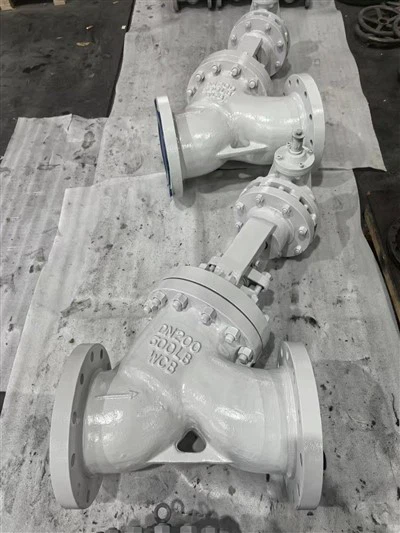
![Lift Type Check Valve]() Lift Type Check ValveThe Lift Type Check Valve is a common valve type, mainly used to prevent the medium from flowing back in the pipeline and ensure the one-way flow of the fluid.view more
Lift Type Check ValveThe Lift Type Check Valve is a common valve type, mainly used to prevent the medium from flowing back in the pipeline and ensure the one-way flow of the fluid.view more -
![Swing Type Check Valve]() Swing Type Check ValveThe swing type check valve is a common valve type, which is mainly used to prevent the reverse flow of fluid in the pipeline, ensure the unidirectional flow of the medium, and thus protect the safe operation of the pipeline system and...view more
Swing Type Check ValveThe swing type check valve is a common valve type, which is mainly used to prevent the reverse flow of fluid in the pipeline, ensure the unidirectional flow of the medium, and thus protect the safe operation of the pipeline system and...view more -
![Dul-Plate Wafer Type Check Valve]() Dul-Plate Wafer Type Check ValveThe dul-plate wafer type check valve is a compact check valve, which is mainly used to prevent the reverse flow of the medium in the pipeline. It has a light structure and is easy to install. It is widely used in the petroleum,...view more
Dul-Plate Wafer Type Check ValveThe dul-plate wafer type check valve is a compact check valve, which is mainly used to prevent the reverse flow of the medium in the pipeline. It has a light structure and is easy to install. It is widely used in the petroleum,...view more -
![Single Plate Wafer Type Check Valve]() Single Plate Wafer Type Check ValveThe single plate wafer type check valve is a check valve with a simple structure and easy installation. It is mainly used to prevent the reverse flow of the medium in the pipeline. Its design is compact and suitable for occasions with...view more
Single Plate Wafer Type Check ValveThe single plate wafer type check valve is a check valve with a simple structure and easy installation. It is mainly used to prevent the reverse flow of the medium in the pipeline. Its design is compact and suitable for occasions with...view more -
![Axial Flow Check Valve]() Axial Flow Check ValveAxial flow check valve is a high-efficiency, low-resistance check valve, mainly used to prevent the reverse flow of media in pipelines. Its unique design enables it to perform well in high-pressure and high-flow situations.view more
Axial Flow Check ValveAxial flow check valve is a high-efficiency, low-resistance check valve, mainly used to prevent the reverse flow of media in pipelines. Its unique design enables it to perform well in high-pressure and high-flow situations.view more -
![Butterfly Check Valve]() Butterfly Check ValveThe butterfly check valve is an automatic valve, mainly used to prevent the backflow of the medium and ensure one-way flow. It has a simple structure, small size and light weight, and is widely used in water treatment, petrochemical,...view more
Butterfly Check ValveThe butterfly check valve is an automatic valve, mainly used to prevent the backflow of the medium and ensure one-way flow. It has a simple structure, small size and light weight, and is widely used in water treatment, petrochemical,...view more


Why Choose Us
Our Product
Gate valve, Globe valve, Check valve, Ball valve, Butterfly valve and slab gate valve etc. are our products range covered different materials of CS, LTCS, SS, DSS, ALLOY S etc. and standards of ANSI, DIN, BS, JIS, and GB etc.
Quality Assurance
We have 100% quality guarantee to customers. We will be responsible for any quality problem.
Production Market
PORO's products are exported to ASEAN, Europe, South America, Middle East, Africa and so on. In the past, the annual business volume was as high as 40 million RMB.
Rich Experience
Since the establishment of the company, we have focused on production. Our company has many years of production work experience. The concept of customer-oriented and win-win cooperation makes the company more mature and stronger.

Prevention of Backflow: The primary function of check valves is to prevent backflow, which can cause damage, contamination, or interference with the intended flow direction.
Protection of Equipment: By preventing reverse flow, check valves safeguard pumps, compressors, and other equipment from potential damage.
Automatic Operation: Check valves operate automatically without the need for external control, making them easy to use and reliable.
Minimal Maintenance: Due to their simple design and operation, check valves typically require minimal maintenance, reducing downtime and operational costs.
Compact Design: Check valves are generally compact, making them suitable for installation in systems with limited space.
Technical Parameters
|
Nominal diameter (DN): |
DN15-DN600 (customizable according to needs) |
|
Pressure level (PN): |
PN10-PN160 (or higher pressure level) |
|
Applicable temperature: |
-20°C to 550°C (depending on the material) |
|
Valve body material: |
Cast iron, carbon steel, stainless steel, alloy steel, etc. |
|
Sealing material: |
Metal seal, rubber, polytetrafluoroethylene (PTFE), etc. |
|
Connection method: |
Flange connection, threaded connection, butt welding connection, etc. |
Application of Check Valve


Water and Wastewater Treatment:
In water and wastewater treatment plants, check valves are preventing backflow, thus, they are ensuring the quality of the drinking water and that the contaminated water doesn’t get into the clean system. They are integral parts of water disinfection systems, pump stations, and sludge treatment.
Oil and Gas Industry:
The oil and gas industry is highly dependent on check valves to regulate the movement of oil, natural gas, and byproducts through pipelines and equipment. These units make sure the hazardous and corrosive fluids are not backflowing, which can cause leaks or explosions.
Chemical Manufacturing:
Check valves in the chemical manufacturing industry are indispensable for the proper flow direction of any chemicals used during processing. They are crucial for system integrity preserving by preventing the mixing of incompatible chemicals and the damaging of sensitive devices from the reverse flow.
Power Generation:
In power plants, especially the ones using steam turbines, check valves are of great importance as they control the flow of steam and the cooling water. They make sure that boilers, condensers, and heat exchangers run well.
HVAC Systems:
HVAC systems apply check valves to regulate the flow of heating or cooling medium (generally water or refrigerant) in the system. These valves are the key components that prevent the reverse flow which causes inefficiencies or damages the system components.
Microfluidics:
In microfluidics, check valves can be miniaturized to control the flow of fluids in micro-channels, which allows for the precise control and manipulation of small volumes of liquids. Such is relevant in drug discovery, point-of-care diagnostics, and lab-on-a-chip devices.
Aerospace:
Check valves are very important in aerospace applications, such as fuel systems, hydraulic systems, and environmental control systems. In these applications, check valves must operate under extreme force and within gas lines at high altitudes with minimal pressure loss.
Automotive Industry:
In vehicles, check valves are used in various systems, such as braking systems and emission control systems, to control the flow of fluids and gases. This ensures the smooth operation of these critical systems, reducing the need for frequent maintenance and improving fuel efficiency.
Marine Applications:
Check valves are employed in marine systems to control the flow of water, fuel, and other fluids, preventing backflow that could compromise the operation of the vessel. This enhances the efficiency and safety of marine operations by maintaining proper fluid flow.
Agriculture:
Agricultural irrigation systems often utilize check valves to control the flow of water and prevent backflow, ensuring efficient water distribution. This helps in conserving water and reducing the energy required for pumping.
Food and Beverage Processing:
In the food and beverage industry, check valves help control the flow of liquids during processing, preventing contamination and ensuring product quality. This contributes to efficient production processes and reduces the risk of costly recalls.
Ball check valves: These valves use a ball that sits on a seat to allow fluid to flow in one direction but prevent backflow when the fluid flows in the opposite direction.
Inline check valves (Globe-Style Sliding Disc Check Valve): These valves are installed within the piping system and use a spring-loaded disc to allow fluid to flow in one direction and prevent backflow when fluid flows in the opposite direction.
Swing check valves (Butterfly Check Valve) : These valves use a swinging disc to allow fluid to flow in one direction and prevent backflow when fluid flows in the opposite direction.

Lift check valves: These valves use a piston or ball to lift off the seat, allowing fluid to flow in one direction but preventing backflow when the fluid flows in the opposite direction.
Tilting disc check valves: These valves use a tilting disc to allow fluid to flow in one direction and prevent backflow when fluid flows in the opposite direction.
Wafer check valves: These valves are installed between flanges and use a spring-loaded disc to allow fluid to flow in one direction and prevent backflow when fluid flows in the opposite direction.
Components of Check Valve
Body: The main structure of the valve, which houses the internal components and provides the pathway for fluid flow. It is typically made of metal or plastic, depending on the application.
Seat: The surface within the valve body against which the closing mechanism (disc, ball, or diaphragm) seals to stop reverse flow. The seat must be precisely machined to ensure a tight seal.
Disc/Clapper, Ball, or Diaphragm: The moving part that opens to allow forward flow and closes to prevent backflow.
Disc / Clapper: In swing check and lift check valves, a disc pivots or lifts to allow flow.
Ball: In ball check valves, a ball moves away from the seat to permit flow and returns to the seat to block reverse flow.
Disc / Piston: Uses a spring and disc in the center of the bore with flow passes around the disc. When flow drops the spring energizes and pushes the disc closed.
Diaphragm: In diaphragm check valves, a flexible diaphragm moves to open or close the flow path.
Hinge or Guide: In swing check valves, a hinge pin allows the disc to pivot. In lift check valves, guides or cages keep the disc aligned and allow it to move up and down.
Spring (in some designs): Some check valves, such as spring-loaded check valves, incorporate a spring to help close the disc or ball more quickly when flow stops or reverses, providing a quicker response to prevent backflow.
Cover (or Cap): The cover or cap is a removable part of the valve body that allows access to internal components for maintenance and inspection.
Seal or Gasket: A seal or gasket is used between the body and the cover to ensure a leak-tight connection.
End Connections: These are the points at which the valve connects to the piping system. Common end connections include threaded, flanged, or welded ends.
Packaging and Shipping


Our Certificates

FAQ
As one of the leading check valve manufacturers and suppliers in China, we warmly welcome you to buy high quality check valve made in China here from our factory. For customized service, contact us now.
gas check valve, ball check valve, marine check valve