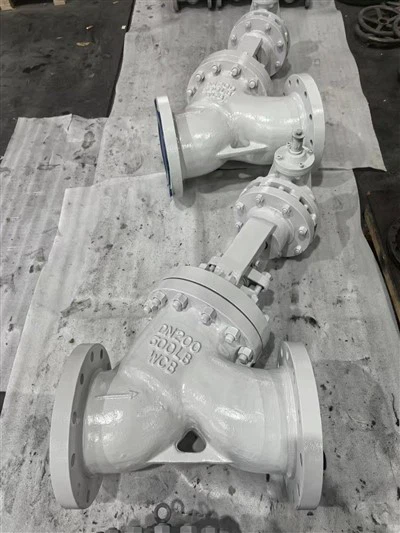
Zhejiang PORO Valve Manufacturing Co., Ltd , established in 1997 with oversea's investment, covered an area of 23186 square meters, is a leading manufacturer & sales in China. Today PORO valve has been widely used in domestic and international large-scale petroleum, chemical, electric power, iron and steel, shipbuilding, water treatment and other fields.
-
![Small Size Of Forged Valve]() Small Size Of Forged ValveSmall Size Forged Valve refer to valves with a nominal diameter less than or equal to DN50 and manufactured using a forging process. The valve body is usually made of carbon steel, alloy steel or stainless steel, and has the advantages...view more
Small Size Of Forged ValveSmall Size Forged Valve refer to valves with a nominal diameter less than or equal to DN50 and manufactured using a forging process. The valve body is usually made of carbon steel, alloy steel or stainless steel, and has the advantages...view more -
![Large Size Of Forged Valve]() Large Size Of Forged ValveLarge size of forged valve refer to valves with a nominal diameter greater than DN50 and manufactured using a forging process. The valve body is usually made of carbon steel, alloy steel or stainless steel, and has the characteristics...view more
Large Size Of Forged ValveLarge size of forged valve refer to valves with a nominal diameter greater than DN50 and manufactured using a forging process. The valve body is usually made of carbon steel, alloy steel or stainless steel, and has the characteristics...view more


Why Choose Us
Our Product
Gate valve, Globe valve, Check valve, Ball valve, Butterfly valve and slab gate valve etc. are our products range covered different materials of CS, LTCS, SS, DSS, ALLOY S etc. and standards of ANSI, DIN, BS, JIS, and GB etc.
Quality Assurance
We have 100% quality guarantee to customers. We will be responsible for any quality problem.
Production Market
PORO's products are exported to ASEAN, Europe, South America, Middle East, Africa and so on. In the past, the annual business volume was as high as 40 million RMB.
Rich Experience
Since the establishment of the company, we have focused on production. Our company has many years of production work experience. The concept of customer-oriented and win-win cooperation makes the company more mature and stronger.
Advantages of Forging Valve
Strength and Durability
Forging valves are well-known for their exceptional strength and durability. The forging process enhances the grain structure of the metal, making it highly resistant to impact, pressure, and thermal stress. These types of valves can withstand extreme conditions and offer reliable performance in demanding applications.
Enhanced Corrosion Resistance
The forging process aligns the grain structure of the metal, reducing the possibility of impurities and air pockets. This improves the resistance to corrosion, erosion, and chemical attack. As a result, forging valves are suitable for use in corrosive environments such as chemical plants and offshore applications.


Superior Mechanical Properties
The directional grain flow achieved during forging ensures excellent mechanical properties. This includes high tensile and yield strength, fatigue resistance, and impact toughness. These properties make high quality forging valves ideal for applications that require precise control, high pressure, high temperature, or frequent cycling.
Valve Design Flexibility
Forging allows for intricate shapes and close tolerances, enabling the creation of quality valves with complex geometries and precise dimensions. This flexibility allows engineers to optimize valve designs for specific operational requirements, resulting in improved performance and efficiency.
Application of Forging Valve
Oil and gas
Forging valves are critical in managing the flow of hydrocarbons in both upstream and downstream processes.
Power generation
High-pressure steam and water flow control require robust valves, making forged parts ideal for turbines, boilers, and condensers.
Chemical processing
Chemical plants use forging valves to handle aggressive substances, ensuring safety and efficiency.
Water treatment
Forging valves regulate water flow and pressure in municipal and industrial water treatment systems.
Comparison between forged valves and cast steel valves
|
Characteristics |
Forged valve |
Cast steel valves |
|
Manufacturing process |
Forging |
Casting |
|
Material |
A105/LF2/F304/F316/F321 so on. |
WCB/LCB/CF8/CF8M so on. |
|
Strength |
High |
General |
|
Pressure resistance |
Good |
General |
|
Sealing performance |
Excellent |
Good |
|
High temperature resistance |
Good |
General |
|
Corrosion resistance |
Good |
General |
|
Service life |
Long |
General |
|
Cost |
High |
Low |
Types of Forging Valve
Gate Valves
By raising or lowering a wedge-shaped gate or disc, gate valves regulate the flow of fluids. They offer a tight seal when fully closed, making them perfect for applications that need a complete shut-off.
Globe Valves
Globe valves control fluid flow by rotating a disc towards or away from the flow. They frequently find use in throttling applications because they provide precise control over flow rates.
Check Valves
Check valves can only allow fluid to flow in one way, eliminating backflow. They rely on the force of the flowing fluid to open or close the valve.
Ball Valves
Ball valves rotate a sphere with a hole to control flow. They are renowned for their longevity and low maintenance requirements and provide quick and dependable shutdown.
Butterfly Valves
Butterfly valves control flow by turning a “butterfly” into a disk in the flow path. They are frequently utilized in big pipelines and provide reasonable flow control.
Needle Valves
With their thin, needle-like stems, needle valves offer precise control over flow rates. They are perfect for adjusting flow precisely.
Pressure Relief Valves
Pressure relief valves automatically discharge excess pressure in a system and avoid damage or explosions. They guarantee system security.
Forged Plug Valves
Plug valves use a cylindrical or tapered plug to control flow. Forged plug valves are well-suited for handling abrasive and corrosive fluids.
Process of Forging Valve
The journey of a forging valve begins with selecting the right material. Common materials used include carbon steel, stainless steel, and various alloys. The choice depends on the valve’s intended application and the specific operational conditions.
Once the material has been chosen, it is heated to a temperature where it becomes malleable. This heating process is important for making the metal easier to shape. Thus ensuring that it maintains its integrity throughout forging.
The core of the forged manufacturing process is the actual forging of the valve. This involves shaping the heated metal using mechanical or hydraulic presses. The forging can be done through various techniques. This includes open-die forging, closed-die forging, and drop forging.
Forging Techniques:
Open-Die Forging
Utilizes simple dies to deform the metal, suitable for large and less complex parts.
Closed-Die Forging
Uses complex dies to create more precise shapes and details, ideal for intricate valve designs.
Drop Forging
This involves dropping a heavy hammer onto the metal, commonly used for smaller, high-strength components.
After forging, the valve undergoes machining to refine its dimensions and surface finish. This step involves processes such as turning, milling, and drilling to achieve precise measurements and functionality.
The forged and machined valve body often undergoes heat treatment to enhance its mechanical properties. This process involves heating the valve to specific temperatures and then cooling it in a controlled manner. This is done to improve strength, hardness, and toughness.
We need to ensure it meets quality standards. So, before the forged valve body is finalized, it undergoes rigorous inspection and testing. This includes visual inspections, dimensional checks, and functional tests.
The final step in the forged manufacturing process involves finishing. This process involves cleaning, coating, and assembly. These steps ensure the valve body is ready for installation and use.
Finishing Details:
Cleaning
Removing any residues or contaminants from the valve’s surface.
Coating
Applying protective coatings to enhance corrosion resistance.
Assembly
Installing components like stems and seats.
Conducting a final inspection to ensure all components are correctly assembled.
Packaging and Shipping


Our Certificates

FAQ
As one of the leading forging valve manufacturers and suppliers in China, we warmly welcome you to buy high quality forging valve made in China here from our factory. For customized service, contact us now.
forging valve distributor, forging diverting valve, forging thread sealing forging valve