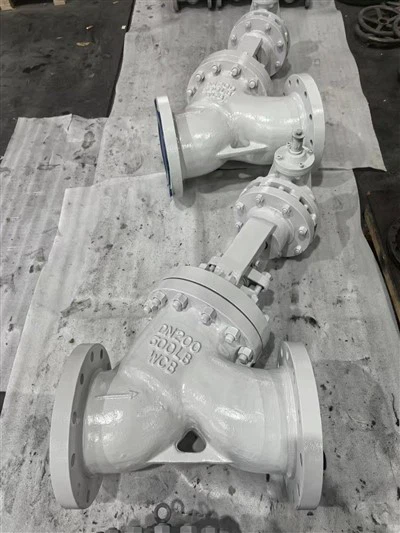
Wedge gate valves may be installed on horizontal and vertical pipes, but the direction of installation must be selected according to specific working conditions and design characteristics to ensure sealing performance, operational reliability and long-term stability. Here's a breakdown:
I. Horizontal Pipeline Installation: Mainstream Application Scenarios
Applicability: Wedge gate valves are most commonly used for horizontal pipe installation, especially in the following cases:
High-pressure, high-temperature conditions (e.g., long-distance oil and gas pipelines): With horizontal installation, the weight of the gate has little effect on the sealing surface. wedge structure can uniformly transmit the pressure of the medium, forming a reliable self-tightening seal.
Pipes containing particulate media (e.g., sewage treatment, slurry transportation): through horizontal installation, solid particles in the medium are less likely to accumulate between the gate and valve seat, reducing the risk of wear and blockage.
Applications that require frequent opening and closing (e.g. chemical process control): With horizontal mounting, valve stem drive torque is more uniform, operation labor is lower, and automatic control (e.g., electric or pneumatic actuation) is easier to achieve. Installation Precautions:
At the inlet of the valve, a certain length of straight pipe (usually 5 times the diameter of the pipe) should be maintained to reduce the effect of turbulent media on the sealing surface.
A drain shall be provided at the bottom of the valve to drain media during closure to prevent corrosion or freezing.

II. Vertical Pipeline Installation: selected according to specific conditions of use.
Scope of application: Wedge gate valves mounted on vertical pipes must meet the following conditions:
Dielectric flow upward (e.g., boiler feedwater system): Dielectric pressure can help the sealing gate and valve seat, improving sealing effect.
For example, vertically installed wedge gate valves in boiler feedwater pipelines in coal-fired power plants use water pressure to self-sealing, reducing the risk of leakage.
Space constraints or pipeline layout requirements (e.g., underground pipelines, compact equipment area): Vertical installation saves horizontal space and is suitable for enclosed environments.
Bidirectional sealing requirements (e.g., nuclear power plant cooling water systems for nuclear power plants): Some wedge gate valves are designed to be sealed in both directions and, when installed vertically, can withstand both vertical and horizontal media pressure to ensure safety.
Installation Precautions:
The gate's own weight may cause eccentricity on the sealing surface, which may require to be compensated by springs or wedge angles (e.g., a resilient gate structure).
When the medium flows downwards, a air vent valve should be installed above the valve to prevent air resistance and difficulty of operation.
When not in use for long periods of time, the gate should be placed in a semi-open position to prevent gravity-induced seal deformation.
III. Key Design Factors Affecting Installation Direction
Type of Gate:
Resilient Gate: Compensation for thermal expansion or installation deviations due to its own deformation; suitable for vertical installation (e.g., boiler feedwater valves).
Double gate: Split design, automatic centering to reduce gravitational impact; suitable for large diameter vertical pipe.
Seating structure:
Hard seal seat (e.g. metal to metal) is sensitive to mounting direction; uniform medium pressure distribution must be ensured.
Soft sealing seats (such as rubber lining) can accommodate angle bias, but high temperatures must be avoided to prevent the the sealing material from aging.
Actuation Method:
Manual valves require to consider operating torque (e.g., extended handwheels or weight) when installed vertically. Electric or pneumatic valves require torque sensor to monitor their sealing state to prevent gravity-induced driver failure.