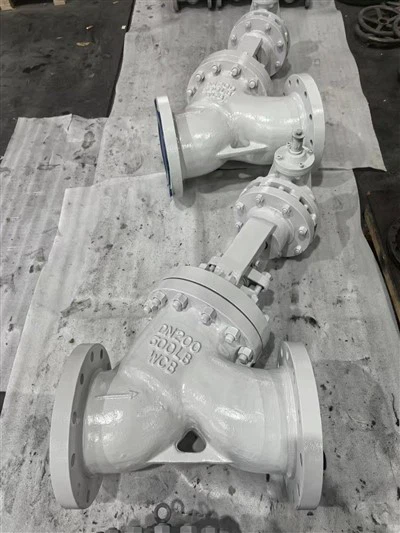
I. Classification of Valve Manufacturing Processes and Industry Application Positioning
In modern industrial piping systems,such as petrochemicals, electricity and energy, long-distance oil and gas transmission, and fine chemicals,valves are critical pressure-bearing components for controlling media flow, regulating pressure and velocity. Their reliability directly determines the operation safety of the whole process system. According to manufacturing process, industrial valves are mainly divided into cast valves and forging valves. Compared with traditional cast valves, forging valve is the first choice for high pressure, high temperature and cyclic loading due to their dense microstructure, superior mechanical properties and extremely low internal defect rates. Widely used in important industrial pipelines, it is very important to ensure the safe and stable operation of high voltage pipeline system.

II. Core Performance Advantages of Forged Valves
The core advantages of forging valve is its unique thermalforging process. Through high-temperature, high-pressure plastic deformation and repeated forging of high quality steel billets, the process completely breaks the the steel's original coarse grain structure and refines the metal's microstructure. This effectively eliminates the inevitable internal pitfalls of casting-such as gas porosity, shrinkage cavities, loosening and slag inclusions. Forged valve bodies with continuous, complete flow of metal grain and uniform, compact overall structure. Compared with castings of the same material, it has significantly higher tensile strength, impact toughness and fatigue resistance, which solves the problems of cracking, deformation and leakage of standard valve under high pressure. In addition, the high finish of the forging surface can achieve high-precision machining, so that the valve seat sealing surfaces matching accuracy is higher, to ensure the long-term operation of the reliable sealing performance.
III. Advantages of structural integrity and quality control
In addition to excellent material properties, the structural stability and controllable quality of forging valves make them especially suitable for strict industrial environments. Forged valves are usually formed through integral forging, allowing key components-such as the valve body, flange and connecting nozzle-to be processed as a whole. This greatly reduces the number of welded joints, effectively reduces safety risks associated with welded defects such as porosity and cracks, and reduces the overall leakage risk of piping system. In addition, the raw materials used in forging have high purity and controllable material properties. steel grades-such as A105, F304, F316 and F22 -can be selected according to specific operating conditions, making them suitable for complex environments such as high temperatures, hydrogen service and hydrogen sulfide corrosion. Each forged valve is subjected to non-destructive testing (such as ultrasonic and magnetic particle inspection) to achieve full quality traceability and ensure full compliance with acceptance standards for high-end industrial equipment.
IV. INTRODUCTION The main reasons why forged valves are suitable for high pressure working conditions
Forged valves are indispensable in high pressure applications. Industrial high-pressure pipeline system has the characteristics of high pressure, high fluctuation of pressure, medium impact and so on. Standard cast valves usually contain small internal voids or defects. Under continuous high pressure impact, these defects will propagate, easily lead to valve body cracking, media leakage and other safety incidents, and cannot meet the requirements of long-term stable operation of the system.
Instead, forged valves are formed through plastic deformation, which results in a dense internal structure with no gaps and abnormal structural stiffness. They can effectively withstand high pressure shock, water hammer loads and thermal stress and resist plastic deformation and fatigue damage. Its superior creep resistance ensures the stability of the structure and the reliability of the seal when running for a prolonged time under seal relaxationtemperature and pressure. In high risk and high pressure applications such as oil and gas transportation, thermal power steam systems and chemical hydrogenation, imitation valves can reduce the risk of equipment leakage and explosion, and meet the safety design standards of industrial high pressure pipelines.
V. Summary and Industry Application Value
In short, forging valve has the advantages of particle compactness, strength, toughness, structural stability and quality control, which overcomes the performance limitations of cast valves in a demanding and pressurized operating environments. The safety and stability of equipment is the core of production and operation in modern industrial high-voltage pipeline system. Forged valve, as an important pressure-bearing element, has a reputation for its reliable and comprehensive performance. It has become a standard choice under high pressure, high temperature, corrosive environment and cyclic loading. They provide a solid guarantee for the safe, continuous and efficient operation of industrial piping systems in all walks of life and provide immense value for engineering applications.