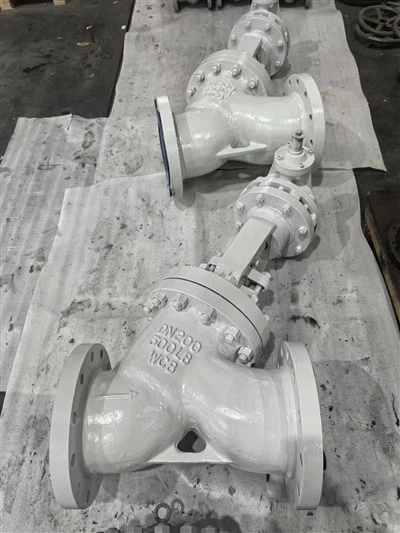
The installation method of solid disc gate valve (solid wedge gate valve) needs to be selected according to the design, dielectric characteristics and application requirements of pipeline system design. Its core principle is to ensure that the seal is reliable, flexible and easy to maintain. The common installation methods and precautions are as follows:
1, Horizontal installation (most common method).
Applicable scenarios
The piping is arranged horizontally with the valve axis parallel to the ground.
Suitable for most media (e.g. water, steam, oil, natural gas, etc.), especially for working conditions where gravity has little impact.
Installation key points
Body direction: Make sure the flow arrow on the valve body is in the same direction as the medium (if the valve has a flow direction label).
Support fixation:
Install fixed brackets on either side of the valve pipeline to prevent valve displacement due to changes in media pressure or temperature.
In order to avoid having the weight of the valve entirely borne by the pipe, especially for large caliber valves, separate brackets should be set up.
Workspace:
Make sure there is plenty of room for handwheels, electric actuators or pneumatic actuators (a gap of 1.5 times the height of the valve is usually required).
If the valve is electric, cable laying space and maintenance channels need to be reserved.
advantage of advantage
The flow of media is steady, which reduces the influence of turbulence on the sealing surface.
Easy to observe valve status (such as leakage, opening instructions) and routine maintenance.

2, Vertical installation (vertical installation).
Applicable scenarios
Pipes are arranged vertically with the shaft perpendicular to the ground.
It is common in situations where space is limited or where the flow of media needs to be changed vertically (e.g., pipes between floors, equipment connection pipelines).
Installation key points
Medium flow direction:
It is generally recommended that media flow from bottom to top ("low entry, high") and that medium pressure be used to assist sealing and reduce the risk of leakage.
If the medium flows from top to bottom, it is necessary to determine whether the valve sealing design can withstand the effects of the medium's gravity (for example, soft seal gate valves may deform the sealing surface due to gravity).
Valve stem protection:
When installed vertically, the stem should be vertically upward to avoid dust or impurities accumulating on the valve stem thread, thus affecting the flexibility of operation.
If installed outdoors, a rain cover or stem protection sleeve should be added to prevent rainwater erosion.
Support and strengthen:
Vertical piping shall be supported below the valve to prevent pipeline deformation due to the valve's own weight or media pressure.
advantage of advantage
Save horizontal space for a compact pipeline layout.
The gravity of the medium can assist seal (at low in and high out) and improve the reliability of the seal.
3, Tilt installation (special working conditions).
Applicable scenarios
When the pipe needs to be arranged at an angle (such as tilted pipe, equipment connection pipes, etc.), it cannot be adjusted horizontally or vertically.
It is commonly found in complex pipeline systems in chemical and petroleum industries.
Installation key points
Angular restrictions:
Inclination is generally not more than 15 °, otherwise the uneven distribution of forces on the sealing cover due to uneven distribution of medium gravity will lead to leakage.
Valve stem Direction:
The stem shall remain approximately vertical (tilt angle ≤ 5 °) to ensure proper operation of the operating mechanism (e.g. handwheel, actuator).
Strengthen support:
support brackets are added on both sides of the valve and below the valve to prevent stress concentration in the pipe due to tilting.
Preventive measures
Tilting installation accelerates the wear and tear of the sealing cover, hence the need to shorten the maintenance cycle and check regularly for leaks.
Avoid installing large diameter solid disc gate valve on inclined pipe to reduce the impact of dielectric shock on valve stability.
4, General Installation Specifications and Notice.
pipe cleaning
Before installation, the pipe must be thoroughly cleaned of debris (such as solder slag, rust, sand particles, etc.) to prevent impurities from sticking to the sealing surface, causing the disc to leak or damage.
Temporary filters are recommended before and after valve installation to filter particulate matter in media during initial operation.
Alignment and concentric
Ensure that the valve flange is aligned with the pipeline flange with deviation ≤ 1mm in case valve body deformation or mounting stress results in seal failure.
Use specialized flange gaskets (such as metal wrap gaskets and PTFE gaskets) to tighten bolts evenly to avoid local overtightening.
Installation of operational mechanisms
The handwheel or actuator shall be fixed firmly to prevent loosening during operation.
Electric/pneumatic actuators need to be adjusted according to instructions to ensure that opening instructions are consistent with the actual position of the valve.
Pressure testing and leakage inspection
After installation, a pressure test (usually 1.5 times the design pressure) is required to check for leakage of valves and connections.
The test medium shall conform to the actual working conditions (e.g. steam pressure test of steam pipelines to avoid thermal stress damage caused by water).