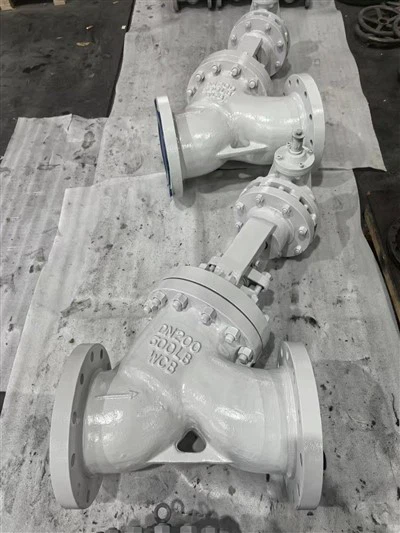
1.Different manufacturing processes
The biggest difference between cast valves and forging valve is the manufacturing process.
Casting valve is formed by heating and melting metal material, pouring it into a mold and then cooling it. The production process consists mainly of:
- Metal melting
- Mold casting
- Cooling molding
- Subsequent machining
Forged valves are formed by heating metal billets at high temperatures and then using pressure equipment. During forging, the inner structure of the metal becomes more compact.
Simply put:
Casting valve belongs to the category of casting molding .
Forged valves fall under the category of pressure forming .
That is the fundamental difference.

2.Different internal structures of materials
Because of different processing methods, the inner metal structure of cast valves and forging valve is very different.
The following internal problems may occur during cooling of cast valves:
- stoma
- shrinkage porosity
- slag inclusion
- Uneven organization
Although modern casting techniques has been greatly improved, there are still some casting defects.
After high pressure forging, the forging valve has denser metal grains, better internal structure continuity and higher mechanical properties.
3. Different Strengths and pressure resistance performance
Forged valves usually have high strength and pressure resistance.
Since the forging process increases metal density, valves have:
Stronger impact resistance
Higher voltage resistance
Better fatigue resistance performance
Forged valves are therefore more suitable for:
High-pressure working conditions
High temperatures
Extreme working conditions system
Although cast valves also meet most industrial needs, casting valves are generally less stable than forging valves in ultra-high pressure and high strength applications.
4. Product sizes vary in scope
Casting process is more suitable for the production of large valves with complex structure.
For example:
Large caliber valves
Complex channel structure
Specially shaped valve body
Because casting can complete complex shapes at once.
Forged valves are usually better for:
Small caliber valve
High-pressure valves
Product structure is relatively simple.
If the size is too large, it will greatly increase the forging cost and processing difficulty.
5. Different surface mass and accuracy
The surface of cast valves usually requires additional follow-up treatment, which may include:
burr – burr
sandy-eyed
surface roughness
Forged valves have a more uniform metal structure due to forging treatment, and the surface quality is usually better after mechanical processing.
Forged valves tend to be more popular, especially in high-precision industrial systems.
6. Different lifespans
Forged valves usually have a longer service life in high voltage and high frequency working environments.
Because of its dense internal structure, it can withstand better:
pressure fluctuation
Temperature changes
mechanical concussion
Cast valves are more susceptible to cracking or fatigue damage under extreme long-term working conditions.
Therefore:
Forged valves are more suitable for critical working conditions
Casting valves are more suitable for general industrial use.