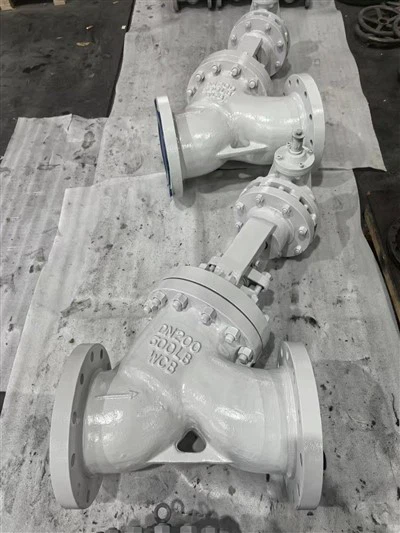
Gate valve issues can be categorized as follows, with specific fault symptoms and solutions analyzed:
I. Leakage
1. Sealing Surface Leakage
Causes:
Inadequate sealing surface material or machining precision (e.g., indentations, scratches, or broken wires) prevent the metal wedge ring or graphite composite ring from fitting tightly.
Corrosion or erosion from the medium (e.g., high-temperature steam or particulate-laden fluids) deforms or wears the sealing surface.
Residual impurities scratch the sealing surface due to incomplete cleaning during maintenance.
Case: A steam pipeline gate valve at a chemical plant developed penetrating scratches on the sealing surface after three months of operation due to insufficient hardness, causing internal leakage.
Solution: Grind the sealing surface to Ra ≤ 0.8μm, replace the sealing ring with a corrosion-resistant alloy, and use ultrasonic cleaning during maintenance.
2. Joint Leakage
Causes:
Uneven bolt tightening or insufficient preload (e.g., tilted flange at the bonnet-body connection).
Gasket aging or incorrect selection (e.g., using ordinary rubber gaskets for high-temperature applications).
Valve body casting defects (e.g., pinholes, cracks) not repaired before installation.
Case: A gate valve in a thermal power plant's main steam pipeline leaked externally due to valve body pinholes. Welding reinforced the gap between the valve body end face and pressure plate.
Solution: Retighten bolts and verify torque, replace with spiral wound gaskets, and repair casting defects by welding or returning the valve to the manufacturer.
3. Actuator Failure-Induced Leakage
Causes:
Actuator zero-position deviation (e.g., pneumatic actuator fails to fully close the valve).
Signal transmission failure (e.g., electric actuator receives erroneous commands).
Case: An electric gate valve at a water treatment plant drifted from its zero position, leaving the valve 95% open and causing internal leakage.
Solution: Manually adjust the actuator's zero position by fully opening/closing the valve and recalibrate sensor signals.
II. Jamming and Operational Difficulties
1. Mechanical Jamming
Causes:
Bent valve stem or thread wear (e.g., frequent operation generates heat, deforming the stem due to friction with packing).
Lack of lubrication or wear in the transmission mechanism (e.g., broken worm gear teeth).
Pipeline stress deforms the valve body (e.g., thermal expansion compresses the valve).
Case: A water injection gate valve at an oilfield had a bent stem, increasing opening/closing torque threefold. Replacing the stem restored normal operation.
Solution: Straighten or replace the valve stem, apply grease (e.g., molybdenum disulfide lithium grease), and adjust pipe supports to relieve stress.
2. Media-Induced Seizure
Causes:
Media crystallization or precipitation (e.g., brine crystallizing at low temperatures and blocking the valve seat).
Impurities lodging in the sealing surface (e.g., sewage fibers entangling the valve disc).
Case: A sugar refinery's evaporator outlet gate valve failed to close due to syrup crystallization. Steam purging restored functionality.
Solution: Install a filter, flush the valve regularly, and select crystallization-resistant materials (e.g., Hastelloy).

III. Structural Damage
1. Valve Body Rupture
Causes:
Overpressure operation (e.g., a 1.6 MPa-rated valve operated at 2.5 MPa).
Low-temperature brittle fracture (e.g., cast iron valve used below −20°C).
Case: A liquefied gas storage tank outlet gate valve cracked due to low-temperature brittleness, causing gas leakage and an explosion.
Solution: Replace with valves suitable for the operating conditions (e.g., austenitic stainless steel for low temperatures) and install a safety valve.
2. Valve Stem Fracture
Causes:
Excessive opening/closing torque (e.g., manual force applied improperly).
Valve stem material defects (e.g., high sulfur content causing intergranular corrosion).
Case: A chemical plant gate valve stem fractured at the thread root due to 0.05% sulfur content (standard: ≤0.02%).
Solution: Select a valve stem material with tensile strength ≥600 MPa (e.g., 35CrMoA) and avoid violent operation.
IV. Installation and Maintenance Issues
1. Installation Deviation
Causes:
Incorrect valve orientation (e.g., horizontal installation of a vertical valve causes disc misalignment).
Poor pipe alignment (e.g., flange misalignment exceeding 0.5 mm).
Case: A pump station outlet gate valve installed at an angle caused unilateral disc/seat wear, leaking at 50 L/min.
Solution: Reinstall and calibrate levelness; use laser alignment tools to adjust pipe coaxiality.
2. Inadequate Maintenance
Causes:
Prolonged lack of lubrication (e.g., dried packing seizing the valve stem).
Infrequent sealing surface grinding (e.g., no maintenance after 2,000 cycles).
Case: A power plant feedwater pump gate valve leaked medium due to aged packing, causing a short circuit.
Solution: Implement a preventive maintenance plan (e.g., quarterly lubrication, annual sealing surface grinding) and use online monitoring systems.
V. Environmental Factors
1. Corrosion
Causes:
Media corrosion (e.g., chloride ions corroding stainless steel valve bodies).
External environmental corrosion (e.g., salt spray in coastal areas).
Case: A coastal chemical plant gate valve cracked due to chloride ion stress corrosion, leaking at 200 L/min.
Solution: Select corrosion-resistant materials (e.g., duplex stainless steel 2205) and apply anti-corrosion coatings (e.g., epoxy resin).
2. Temperature Effects
Causes:
High temperatures causing mismatched thermal expansion coefficients (e.g., metal and graphite rings expanding unevenly).
Low temperatures embrittling materials (e.g., cast iron valves used below −30°C).
Case: A steel plant's blast furnace gas gate valve failed due to high-temperature expansion. Switching to a flexible wedge gate valve resolved the issue.
Solution: Select sealing pairs with matching expansion coefficients (e.g., metal-to-metal seals) and use low-temperature steel valves for cold environments.