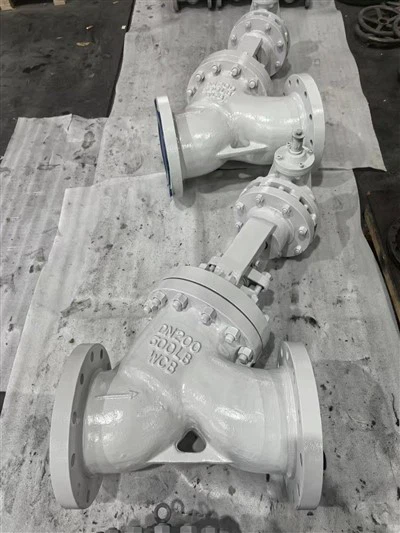
Cuneiform gate valves is a special type of gate valve. Their core feature is a specific angle (wedge angle) formed between the seal and the vertical centerline. The up-and-down movement of the cuneiform gate allows the media to be connected or disconnected. Here's a breakdown:
I. Core Structure and Working Principle
Wedge Sealing Surface Design: the gate seal surface forms angles of 2° 52 ', 3°30′, 5°, 8° and 10° to the vertical central line (the angle increases with the temperature of the medium to prevent interference from thermal expansion and contraction). When closed, the valve stem pushes the gate down, wedges the surface against the valve seat and forms a forced seal by mechanical compression. This applies in particular to low-pressure media conditions.
Gate Types and Adaptability:
Single Gate: Simple in structure, but requires a high angle for sealing and is easily blocked in high temperatures.
Elastic Gate: an annular groove in the middle of the gate compensates for machining errors through slight elastic deformation, suitable for high temperature and pressure environments.
Double gate: consists of two gates, one on the side of the entrance and one on the side of the exit, connected by a spherical core structure that provides superior sealing but requires protection from sticky media adhesion.
Actuation Methods: Support manual, pneumatic, electric, gear and other driving mode. The lifting stem (stem rises and falls with the gate) and non-rising stem (stem rotates) structures are compatible to meet different installation space requirements.

II. Core Advantages
High-Pressure Sealing Performance: wedge angle design, self-reinforcing sealing force when the gate is closed, media erosion and seal corrosion, long service life. Flexible doors, for example, can withstand PN16 pressure and are suitable for high-pressure situations such as power plant ash removal and coal washing plants.
Temperature Adaptability: Flexible gate and double gate structure can compensate for temperature change by deformation and prevent gate and seat jamming. Elastic doors, for example, can remain open and closed normally at temperatures as high as 550°C.
Low Flow Resistance Characteristics: when the gate is fully opened, the media flow channel is open, the flow resistance coefficient low and pressure loss is small.
III. Typical Application Scenarios
Petrochemical Industry: pipeline control for crude oil, natural gas, etc., such as catalytic cracking units in oil refineries and cut-off valves for long-distance pipelines.
Thermal Power Generation Industry: suitable for boiler feedwater systems, steam turbine main steam pipelines and other high-temperature, high-pressure conditions of steam pipe.
Wastewater Treatment and Mining: Using its abrasion and corrosion resistance in sewage pipelines and coal washing plant equipment, the media containing particulate matter are treated.