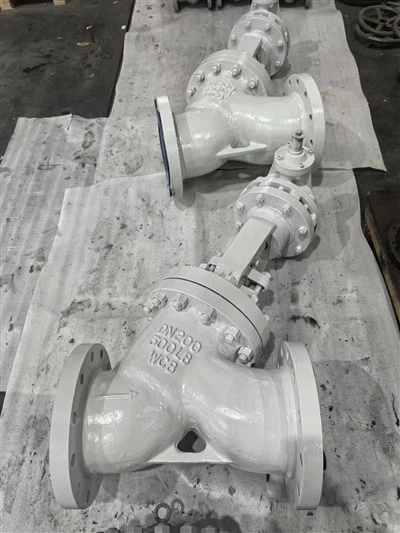
Analysis of the Differences Between Solid Wedge Gate Valves and Flexible Wedge Gate Valves
Solid wedge gate valves and flexible wedge gate valves are both mainstream types of gate valves with the core function of opening and closing pipelines by lifting and lowering the gate disc but there are significant differences between the two in gate disc structure design sealing principles and applicable operating conditions.
I. Structural Design Differences
1. Solid Wedge Gate Valve
The gate disc of a solid wedge gate valve is a one-piece solid structure usually made of metal materials (such as cast iron cast steel stainless steel) with a wedge-shaped cross-section (the wedge angle is usually 2°52′ 3°30′ or 5°) and no elastic deformation structure. The gate disc and valve seat (valve body sealing surface) are in rigid contact and the seal is achieved through the pressure when the valve is closed relying on the wedge structure of the gate disc itself and the precision processing of the valve seat with no additional elastic compensation components between the gate disc and the valve seat. Due to the high rigidity of the gate disc the valve body and valve seat require high coaxiality and parallelism and it usually needs to be matched with a valve body with high casting precision to avoid seal failure caused by assembly deviations.
2. Flexible Wedge Gate Valve
The gate disc of a flexible wedge gate valve is also wedge-shaped but adopts a combined design of "rigid skeleton + elastic components" with common forms including "elastic grooves opened on the gate disc body" and "gate disc combined with elastic materials (such as rubber flexible metal sheets)" which allows the gate disc to undergo elastic deformation within a certain range (the deformation amount is usually ≤ 0.5mm). The seal between the gate disc and the valve seat relies on "rigid support + elastic compensation" and the elastic components can adapt to the slight deviation of the valve seat when the valve is closed to fill the gap between the gate disc and the valve seat reducing the requirements for the machining precision of the valve body. With elastic compensation capability it can be matched with valve bodies with slightly lower machining precision and is especially suitable for valve body types (such as gray cast iron valve bodies) that are prone to slight deformation during the casting process.
II. Differences in Sealing Performance
1. Solid Wedge Gate Valve
The solid wedge gate valve has stable sealing performance under stable operating conditions (no severe fluctuations in temperature and pressure) and clean medium (no particle impurities) and once the gate disc and valve seat fit well it can achieve long-term leak-free sealing. Its sealing performance is greatly affected by temperature changes and when the medium temperature rises or falls sharply the gate disc and valve body are prone to gaps due to differences in material thermal expansion coefficients leading to seal failure; if the medium contains particle impurities they are easy to get stuck between the gate disc and the valve seat and damage the sealing surface. A large torque is required when closing to ensure the gate disc and valve seat fit tightly and if the torque is insufficient the phenomenon of "false closing" is easy to occur leading to medium leakage; after long-term use the sealing surface of the gate disc and valve seat cannot be self-compensated after wear and the sealing parts need to be replaced to restore the sealing performance.
2. Flexible Wedge Gate Valve
The elastic components of the flexible wedge gate valve can compensate for the gap between the gate disc and the valve seat in real time and even if the medium temperature fluctuates causing thermal expansion and contraction of the components or slight deformation of the valve body it can still maintain a good seal with a leakage rate usually lower than that of the solid wedge gate valve (generally meeting the ANSI Class VI sealing standard). It has slightly lower requirements on medium cleanliness and a small amount of particle impurities can be wrapped by the elastic components which are not easy to scratch the sealing surface directly; it has a wider temperature adaptability and can maintain stable sealing in the range of -40℃ to 350℃ (specifically depending on the temperature resistance of the elastic material). The torque required for closing is small and the elastic compensation structure can reduce the probability of "false closing"; after slight wear of the sealing surface the elastic components can fill the gap through deformation extending the service life of the sealing surface and reducing the maintenance frequency.