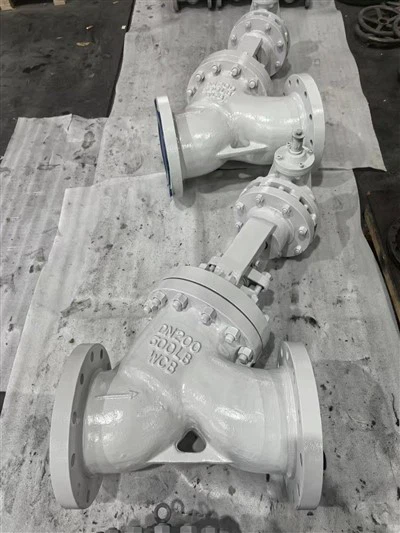
Solid Wedge Gate Valves vs. Flexible Wedge Gate Valves
Solid wedge gate valves and flexible wedge gate valves are two common types of gate valves, differing primarily in structural design, sealing principles, and applicable scenarios. The specific differences are as follows:
1. Structural Design Differences
a. Solid Wedge Gate Valve
The gate disc is a one-piece, solid structure with a single wedge shape (typically featuring a wedge angle of 5°–10°). Its material matches that of the valve body (e.g., cast iron, cast steel, or stainless steel) and contains no joints or elastic components. The metal-to-metal sealing surface between the gate disc and valve seat relies on the disc's inherent rigidity to achieve a tight fit. Its simple design provides high strength, enabling it to withstand high media pressure and impact forces.
b. Flexible Wedge Gate Valve
While the gate disc is generally wedge-shaped, it incorporates an internal elastic structure. Common designs include:
A spring groove in the middle of the gate disc, allowing slight expansion and contraction through deformation.
A split gate disc connected by an elastic element (e.g., a spring or flexible gasket).
This flexibility enables the gate disc to automatically adjust its angle against the valve seat in response to temperature fluctuations or minor installation misalignment.
2. Sealing Performance and Adaptability Differences
a. Sealing Principle
Solid Wedge Gate Valves rely on forced sealing: The rigid gate disc is pressed against the valve seat by stem pressure. This sealing effect is highly dependent on installation precision and media conditions. Slight pipe deformation or thermal expansion/contraction of the valve body can lead to improper sealing surface alignment.
Flexible Wedge Gate Valves utilize elastic compensating seals: The gate disc's flexible structure absorbs stress caused by temperature fluctuations (e.g., gate disc expansion due to rising media temperatures) or installation misalignment, automatically adapting to the seat sealing surface and reducing leakage risk.
b. Adaptability to Operating Conditions
Solid Wedge Gate Valves perform reliably under stable conditions (e.g., normal temperature, low pressure, and media with minimal temperature fluctuations, such as cold water or lubricating oil). However, in high-temperature, high-pressure environments (e.g., steam pipelines) or where media temperatures fluctuate frequently, leakage may occur due to inconsistent thermal deformation between the gate disc and valve seat.
Flexible Wedge Gate Valves are better suited for variable operating conditions, such as:
High-temperature, high-pressure steam pipelines (e.g., main steam pipelines in thermal power plants), where they accommodate differential deformation caused by temperature fluctuations.
Pipelines with large temperature swings (e.g., refrigerant pipelines in refrigeration systems, where temperatures range from -20°C to 80°C).
Media containing trace fibers or fine particles (e.g., sewage or slightly contaminated industrial wastewater), where the flexible structure reduces seal failure from particle entrapment.
3. Application Scenarios
a. Typical Applications of Solid Wedge Gate Valves
These valves are ideal for applications requiring stable media, high pressure, and robust gate strength, such as:
Shutting off normal-temperature, low-pressure pipelines for industrial water and oil products (e.g., tank outlets in chemical plants).
Low-pressure steam pipelines (pressure ≤ 1.6 MPa) where frequent starts/stops must be avoided to prevent temperature shock.
Applications prioritizing simplicity and low maintenance (no elastic components, resulting in a low failure rate).
b. Typical Applications of Flexible Wedge Gate Valves
These valves excel in complex operating conditions demanding sealing stability, such as:
High-temperature, high-pressure steam pipelines (e.g., thermal power plant main steam lines), where they handle differential deformation between the gate and valve seat.
Pipelines with significant temperature fluctuations (e.g., refrigeration system refrigerant lines).
Media containing small amounts of fibers or fine particles (e.g., sewage), where slight gate deformation reduces clogging risk.
4. Maintenance and Durability Differences
a. Maintenance Cost
Solid Wedge Gate Valves feature a simple design without vulnerable elastic parts. Routine maintenance involves inspecting the sealing surface for wear (e.g., scratches on the metal seal), resulting in low repair costs. However, if the sealing surface is damaged (e.g., by particles), the entire gate must be replaced, which is more labor-intensive.
Flexible Wedge Gate Valves have wearable elastic components (e.g., spring grooves or connecting gaskets) that may lose elasticity over time due to fatigue or aging, requiring regular inspection and replacement. Maintenance frequency is slightly higher than for solid wedge valves, but minor sealing surface wear can often be compensated by adjusting the elastic structure, delaying gate disc replacement.
b. Durability
The rigid gate disc of a solid wedge valve offers strong impact resistance, wearing more slowly than flexible discs when the medium contains small hard particles (e.g., river water with minimal sand/gravel). However, frequent operation may accelerate sealing surface wear due to rigid contact.
The flexible gate disc is slightly less impact-resistant (e.g., prone to erosion at high flow rates) but experiences less hard wear during frequent operation due to its flexible contact, extending service life.

Contact Us
+8617683709841
PORO Ind. Park, Oubei Dongou Ind. Zone, Wenzhou, Zhejiang, China