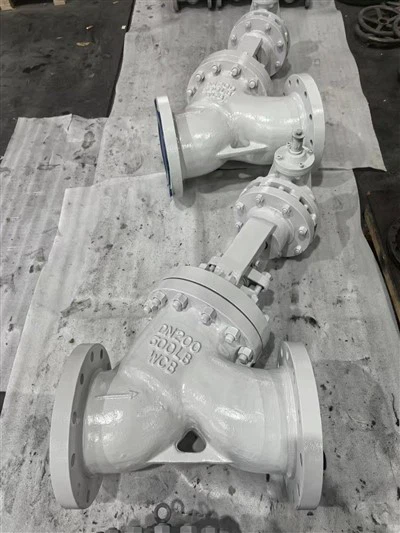
Wedge gate valves and seat gate valves (assuming the latter refers to parallel gate valves) exhibit significant differences in structure, sealing principles, application scenarios, and operational performance:
1. Structural Differences
Wedge Gate Valve
The disc of a wedge gate valve is wedge - shaped. Both the disc and the valve seat sealing surfaces feature a specific angle, which work in tandem to form a sealing pair. As the disc descends during the closing process, this wedge - like structure gradually increases the sealing specific pressure between the disc and the valve seat, ensuring a tight seal. The wedge angles vary across different types of wedge gate valves, typically ranging from a few degrees to approximately 15 degrees. Special working conditions may call for alternative angle designs to meet diverse usage requirements.
Seat Gate Valve (Parallel Gate Valve)
A parallel gate valve's disc comprises two parallel discs connected by mechanisms such as springs. The valve seat has a corresponding parallel structure that aligns with the gate's parallel discs. When the valve closes, either medium pressure or spring force pushes the discs, ensuring they closely conform to the valve seat and form a seal. This design facilitates a bidirectional sealing function.

2. Sealing Principle Differences
Wedge Gate Valve
When closing, the wedge - shaped disc of a wedge gate valve, under the pressure exerted by the valve stem, inserts into the valve seat sealing surface. As it moves downward, the lateral force generated by the wedge structure ensures a tight fit between the disc and valve seat sealing surfaces, preventing medium flow. Thanks to the self - tightening effect of the wedge structure, it can automatically adjust to maintain optimal sealing performance, even when minor gaps occur due to temperature changes or wear during operation.
Seat Gate Valve (Parallel Gate Valve)
Upon closing, medium pressure acts on the two parallel discs of a parallel gate valve, pushing them towards the valve seat. Alternatively, external forces like spring force ensure the discs make close contact with the valve seat, creating a seal. The parallel design of the disc and valve seat results in relatively uniform pressure distribution on the sealing surface. In bidirectional - flow media, the medium pressure aids in better disc - to - seat fitting, regardless of the flow direction, thus achieving bidirectional sealing.
3. Application Scenario Differences
Wedge Gate Valve
Wedge gate valves are ideal for applications demanding high - performance sealing. Even when the medium contains small amounts of particulate impurities, the wedge - shaped structure can maintain sealing integrity through extrusion deformation. Consequently, they are widely used in long - distance pipelines, storage tank inlets and outlets, and other applications within the petroleum, chemical, and natural gas industries. In these scenarios, the valves must reliably cut off the medium to prevent leakage and ensure system safety and stability.
Seat Gate Valve (Parallel Gate Valve)
Parallel gate valves are better suited for applications involving relatively clean media that require bidirectional sealing, such as urban water supply and steam transmission pipeline networks. The bidirectional flow in these systems necessitates valves with excellent sealing capabilities in both directions. The clean medium environment minimizes the impact of particulate impurities on the sealing surface, enabling parallel gate valves to function optimally.