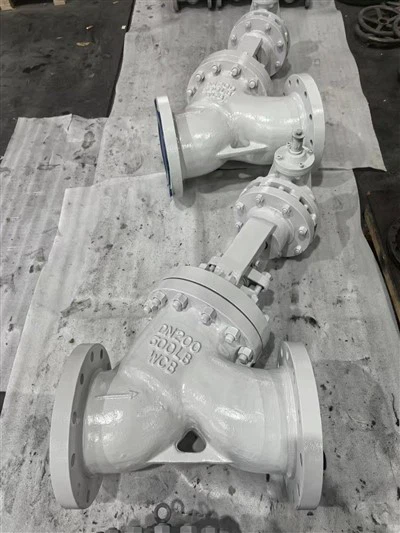
The wedge gate valve primarily consists of components such as the valve body, valve cover, gate, valve stem, and drive device.
Structure: The valve body serves as the outer shell of the valve, providing a channel for fluid flow. The valve cover is mounted on the valve body to seal and protect the internal parts. The gate, a key closing component, features a wedge - shaped design. The valve stem connects the gate and the drive device, facilitating the transmission of driving force. The drive device can be in the form of manual, electric, or pneumatic operation, controlling the upward and downward movement of the gate.
Principle: When opening the valve, the drive device raises the valve stem, which in turn drives the gate to move upward, gradually opening the fluid channel and allowing the medium to pass through smoothly. When closing the valve, the drive device lowers the valve stem, causing the gate to move downward until the two sealing surfaces of the gate closely adhere to the sealing surface of the valve seat, thereby cutting off the fluid flow. Owing to the wedge - shaped structure of the gate, a certain wedging force is generated between the gate and the valve seat during the closing process, further enhancing the sealing effect.

Reasons for the Superior Sealing Performance of the Wedge Gate Valve over the Parallel Gate Valve
Contact Mode of Sealing Surfaces
The gate of the wedge gate valve is wedge - shaped. When the valve is closed, the gate makes line contact or small - area surface contact with the sealing surface of the valve seat. This contact mode enables a higher specific pressure (pressure per unit area) on the sealing surface, allowing for better compression of the sealing surfaces and effectively preventing medium leakage.
In contrast, the gate of the parallel gate valve is parallel to the valve seat sealing surface, resulting in large - area surface contact. In practical applications, achieving uniform contact across the entire sealing surface and attaining an excellent sealing effect is challenging, as factors such as the machining accuracy and installation precision of the sealing surface can impact the sealing performance. Even under ideal conditions, the specific pressure on the sealing surface of the parallel gate valve is relatively low, making its sealing effect inferior to that of the wedge gate valve.
Wedging Effect
During the closing process of the wedge gate valve, as the gate descends, the wedge - shaped gate exerts a wedging effect between the valve seats. This wedging force can be adjusted as required, ensuring a tighter fit of the sealing surfaces. Especially under high - pressure conditions, the wedging force increases with the rise in medium pressure, further enhancing the sealing performance.
Parallel gate valves lack this wedging effect. Their sealing mainly depends on the medium pressure pressing the gate against the valve seat. When the medium pressure is unstable or low, the sealing performance may be compromised.
Adaptability to Sealing Surface Wear
If the sealing surface of the wedge gate valve experiences wear during long - term use, the wedging effect allows for adjustments. By appropriately repositioning the gate or applying a greater closing force, the gate can be made to fit tightly with the valve seat again, restoring the sealing performance.
Once the sealing surface of the parallel gate valve wears out, it is difficult to compensate using simple methods. In most cases, the sealing components may need to be replaced to restore good sealing performance.