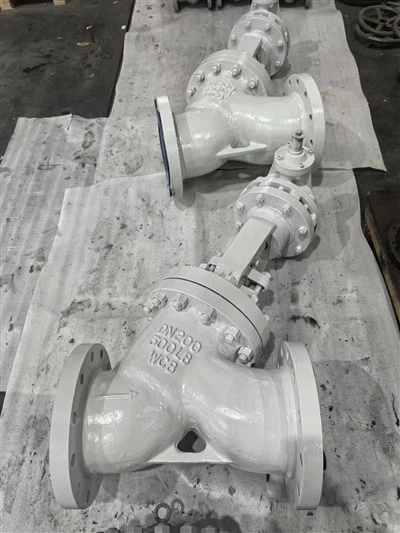
Standard globe valve is a common industrial pipeline control valve. Its function is mainly through the interaction between the disc and valve seat, allowing the flow to open and close, and a certain degree of flow regulation. Because the operating environment of the cut-off valve is characterized by pressure, temperature fluctuations and the erosive effects of the processing medium, components such as valve stem, seal, disc and seat are susceptible to wear and degradation over time.
Regular maintenance not only helps detect problems,such as leaks or opening and closing difficulties,but also minimizes unplanned downtime and repair costs. As a supplier of globe valves, we recommend that customers develop routine inspection schedule based on specific operating conditions to determine maintenance intervals by considering the nature of the processing medium and frequency of valve usage.
1.Inspecting the Valve Body and Bonnet for Leaks
The body and cover are the main pressure-retaining components of the globe valve and should be the primary focus of daily inspection.
During operation, observe the connection between the valve body and bonnet for signs of leakage, crystallization, corrosion or abnormal contamination. If the valve is dealing with a high temperature, high pressure or corrosive medium, even minor leaks cannot be ignored.
In addition, check the valve body surface for cracks, significant rust, deformation or mechanical damage. If any abnormalities are detected in the long-used valve relief piece, the valve should be removed and inspected by a qualified professional.
Based on our experience as a supplier, we typically recommend that customers increase the frequency of inspections based on the hazards and operational pressures of the process medium, rather than adopting a uniform maintenance schedule for all operating conditions.
2.Inspecting the Valve Stem and Packing Seal
The stem is a moving component involved in the daily operation of the globe valve, and the stuffing is usually used to seal the area around the stem.
Over time, exposure to pressure, temperature fluctuations and friction can cause packaging to degrade or lose elasticity, which can lead to external leakage. In addition, if rust, scratches or debris accumulates on the valve stem surface, operational resistance may be increased, affecting the effectiveness of the packing seal. The following points should be noted during the daily inspection:
whether valve stem surface has rust, scratches or obvious wear;
Whether valve stem moves smoothly up and down;
whether the packing cover is loose;
Whether there is leakage around the valve stem;
Whether there is any abnormal jamming or jamming during operation.
If there is a slight leakage on the packaging, the valve shall be adjusted according to the design of the valve and manufacturer's specifications. If the packaging is old or damaged, it must be replaced; do not rely on over-tightening of the packing gland as a long-term solution.

3. Check the seal of the disc and seat.
Disc and valve seat are key components in determining cut-off valve closure performance. During long-term operation, the sealing cover may be worn down by particles, corrosive components or high-velocity flow in the medium.
If the medium continues to flow through the valve after the valve is closed, it may indicate damage to the seal cover of the disc or seat or the presence of a foreign object in the sealing area.
During repair, the operation of the valve should be assessed to determine whether it requires to be removed and inspected. If the valve is not tightly sealed, abnormal pressure drops occurs, or cannot be completely closed, the cause should be promptly investigated.
Disc and seat wear may be more noticeable in applications involving high temperature, high pressure or media containing particles. Therefore, when selecting the globe valve, the appropriate valve body and sealing material should be selected according to the characteristics of the medium to reduce future maintenance burden.
4. Check the handwheel, valve stem thread and operating mechanism
The handwheel and stem threads transform manual operation into vertical movement of the valve stem. A loose handwheel, threaded wear or corrosion of the operating mechanism can make it difficult to open or close the valve.
Avoid opening or closing valves with excessive force during daily operations. Under normal circumstances, the globe valve should be able to open and close smoothly in the correct direction of operation. If the operation suddenly becomes difficult, feels stuck, or prevents the valve from opening or closing completely, inspect the stem, thread, and internal components rather than continuing to exert force.
In the case of an outdoor globe valves, the effects of rain, dust and corrosive environmental conditions on the valve stem and operating mechanism shall also be considered. If necessary, cleaning and lubrication shall be carried out in accordance with manufacturer's maintenance requirements.
5. Inspection of Flanges, Bolts and connectors
The cut-off valve is usually connected to the pipe by flange, thread or welding. These joints may become loose or lose their seal if affected by vibration, temperature fluctuations or stress caused by installation.
Check the flange connections for leaks during daily inspection and check bolts for any obvious signs of loosening, corrosion or damage.
If a leak is detected in a joint, the cause is first identified and then appropriate corrective action is taken. For pressurized pipelines, do not remove or tighten key connectors at will; instead, follow established field safety operating procedures.
In addition, if the piping is subjected to significant forced adjustment or external mechanical stress during valve installation, there may be long-term effects on the valve body and its connection. Therefore, the quality of the initial installation is an important foundation for future maintenance.
6. Dismantling, inspection and maintenance are carried out on a regular basis in accordance with operational conditions.
Maintenance of a standard globe valves cannot be based solely on visual inspection. For key piping in long-term operation, a maintenance plan shall be prepared based on operating pressure, temperature, media corrosion, frequency of opening/closing cycles, valve service life, etc..
Maintenance can generally be divided into three levels:
Routine Inspection: check valve body, stem, packing, connection points for leaks to ensure normal opening and closing operations.
Periodic Maintenance: involves inspection of components such as seals, stem and operating mechanism based on operating conditions, and removal of surface contamination and corrosion.
Overhaul/Disassembly Inspection: performed in the event of internal leakage, opening andclosing difficulties, seal failure or other significant anomalies. This involves a detailed inspection of the disc, valve seat and internal parts, and replacement of worn components if necessary.
As a supplier, we recommend that you maintain a detailed record of valve operation, including information on installation date, medium type, pressure and temperature conditions, repair history, and replacement parts. These data help to assess the actual condition of valves and provide a basis for future procurement of spare parts or replacement of equipment.
Frequently Asked Questions (FAQs): Routine maintenance of Standard Globe Valves
Q1: How often should standard globe valves be maintained?
There is no fixed interval applicable to all operating conditions. Maintenance plans should be developed based on factors such as medium, pressure, temperature, frequency of use and valve the criticality. Critical pipelines typically require more frequent inspections.
What to do if the stem of the cut-off valve shows signs of rust?
First, assess the extent of rust. If there is only slight rust on the surface of the valve, it should be cleaned and maintained according to the manufacturer's instructions. If the stem exhibits significant corrosion, deep scratches, or if its condition interferes with opening and closing operation, professionals should assess whether replacement is required.
Why do globe valve continue to leak after closing?
This may be due to a foreign object between the disc and seat, or to wear, corrosion or damage to the sealing surfaces. The internal sealing components shall be inspected according to specific conditions.
Q4: Why are valves getting harder to open and close?
This could be due to rust on the stem, threaded wear, tight packing, damage to internal components or impurities in the medium. Do not apply too much force when using tools to operate valves.
Q5:Do standard globe valves require to be replaced regularly?
Not necessarily. Valves may continue to be used as long as the body, sealing components and operating mechanism are in good condition and continue to meet the requirements of the current operating environment. However, if serious corrosion, sealing failure or structural damage occurs, the valve should be repaired or replaced in a timely manner.
Q6: How to reduce future maintenance costs when buying globe valves?
In the selection stage, we should specify the medium, temperature, pressure, pipe diameter, frequency, etc., and choose valve body materials and sealing configuration suitable for the actual working conditions. In addition, assessing the availability of spare parts, maintenance advice and aftermarket support from suppliers will help to reduce long-term operating costs.