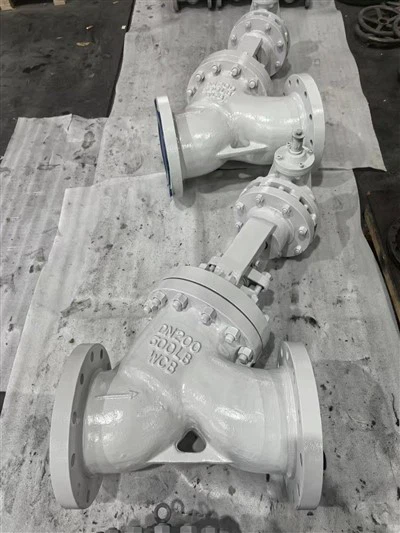
Small forging valves are commonly used in oil, gas, chemical, electricity generation, industrial gas and other industries of small caliber piping systems. Although the structure is compact, its installation quality directly affects sealing performance, operating stability and service life. Due to pipeline medium, pressure, temperature, and valve structure, correct installation procedures must be followed.

1.Valve type and specification to be confirmed prior to installation
valve model, nominal diameter, rated pressure, connection type and material compatibility with piping system shall be confirmed prior to installation.
In addition, check the valve nameplate and product documentation to verify operating pressure, operating temperature and range of suitable media. For pipelines dealing with high temperature, high pressure or corrosive media, these parameters must be carefully checked to avoid operational risks due to poor selection.
2.Check the valve's external and internal condition
Check the small-sized forged valve for indentations, cracks, deformations or other visible damage that may occur during transport prior to actual installation.
Check the connector, seal and thread to make sure they are in good condition. If visible scratches or foreign objects are found on a the sealing surfaces, they must be disposed of before installation.
For long-stored valves, make sure there is no dust, debris or other contaminants inside the valve.
3.Ensure the pipeline interior is clean;
Remove solder slag, metal chips, dust or other impurities from the pipe before installing the valve.
If these foreign objects enter the valve, it may interfere with the movement of the valve core or the cooperation of the sealing surfaces, leading to improper sealing and even internal damage.
Therefore, before connecting the valve, the pipe should be thoroughly cleaned to ensure that there is no visible clutter at the end of the connection.
4. Watch where you install.
Some small wrought valves have special requirements for medium flow and must be installed according to the direction arrow indicated on the valve body.
If the valve is designed in both directions, the orientation of installation shall still be determined in accordance with product specifications and actual process requirements.
For valves with strict flow direction requirements,such as check valves, the incorrect orientation (reverse mounting) must be avoided as it may interfere with the normal operation of the valve. Avoid forced installation and piping stress
When installing small wrought valves, make sure that the connection points at both ends of the pipe are aligned correctly; do not attempt to correct the installation error by forcibly pulling or squeezing the valve.
Too much mounting pressure may cause additional load on the valve body and connection points, which may affect the valve's sealing performance.
Therefore, the piping position should be adjusted to maintain a natural connection to the valve prior to installation.
6. Ensure proper threaded or flanged connections
For small wrought valves with threaded connections, appropriate sealing materials shall be selected according to product specifications and tightening torque shall be controlled.
Insufficient tightening may lead to media leakage, while excessive tightening may damage the thread or valve body connection area.
For flanged valves, ensure that the flanges are parallel to each other and that the bolts are tightened gradually and evenly in the specified sequence to ensure uniform compression of gaskets.
7. Consider permission to move
Small wrought valves are usually installed in a confined space, therefore sufficient operation and maintenance clearance must be reserved during installation.
Handlebars, handwheels or actuators must not be obstructed by other equipment as this may hinder future operations and maintenance.
For valves that require frequent opening and closing, special care should be taken to ensure easy access for operators.
8. Inspect and test after installation.
After installation, verify the integrity of all connections and perform necessary pressure and leak tests according to the specific piping system.
Pay close attention to potential leakage points such as valve connections, stem area and other sealing covers.
For critical industrial piping systems, perform pressure and function tests to confirm correct valve opening and closing in accordance with engineering requirements.
9. Prevent valve damage during installation.
Although small wrought valves are usually lightweight, handwheels, stem or actuators should not be used as lifting points or bearing points during installation.
Avoid direct impact of tool on valve body or sealing surfaces. During installation, special care should be taken to prevent bumps or scratches in precision machining connection area. Abstracts
Key factors to consider when installing small forging valves include type specification, installation orientation, pipeline cleanliness, connection mode, sealing performance, pipeline stress, etc. During installation, avoid forced connection and overtightening and ensure adequate clearance for operation and maintenance of valves.
After installation, seal inspections and function test are carried out according to actual usage. Pipes dealing with high pressure, high temperature, flammable, explosive or corrosive media shall be installed in strict accordance with the valve manufacturer's requirements and relevant engineering standards.