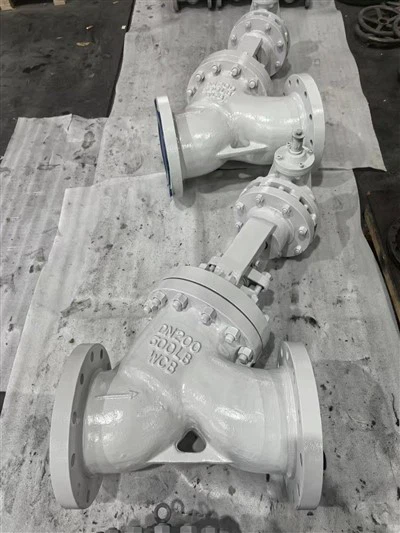
Small forging valve has compact structure, high strength and reliable sealing. It is widely used in pipeline systems in petroleum, chemical and natural gas industries. Common types include gate valves, globe valves, ball valves, check valves and stoppers. Its design characteristics and compatibility with the forging process are as follows:
1. Gate Valve
Structural features
Cuneiform gate: Seal is achieved through the fit between the cuneiform gate and the valve seat. The forging process ensures that the surface roughness the valve seat is ≤Ra0.4μm and leakage rates ≤ 10-6 Pa · m3/s (ANSI Class 600 standard).
Parallel Gate: suitable for low pressure environment. After forging, the parallelism of the gate to the valve seat ≤ 0.05mm, reducing opening torque.
Forging Advantage
High-strength valve body: Forged carbon steel gate valves (e.g. WCB material) have a a tensile strength of up to 485MPa and can withstand a pressure of 16MPa, a 20% improvement over castings (≤400MPa).
Erosion-resistant sealing surface: Forged stainless steel gate valves (e.g. 304/ 316L) have a surface hardness of HRC28-32 and a 3 times longer service life in particulate media.
Typical application: Oil pipeline closure (e.g. API 6A forging gate valves, rated pressure 1500psi).
Steam system regulation (e.g. forged carbon steel gate valves, temperature ≤540°C).
2. Cutoff valve
Structural characteristics: Direct flow path: The forging process allows precise control of the disc and seat cones (usually 45°-60°) to ensure uniform contact pressure on the sealing surface.
Angle gate valve: suitable for space restricted situations; forged valve body with channel turning radius error ≤0.1mm, reducing pressure drop.
Forging advantages: High-precision sealing: Forged stainless Forged stainless steel gate valves (e.g. 316L) with disc and seat fit clearance ≤0.02mm and leakage rate ≤ 10-7 Pa · m3/s (ANSI Class 1500). Heat resistance: Forged nickel-based alloy gate valves (such as Inconel 625) remain sealed at 816°C and are suitable for supercritical power plants.
Typical application: Chemical process control (e.g. forged Hastelloy gate valves, corrosion resistance to concentrated concentrated sulfuric acid corrosion).
Boiler feedwater systems (e.g. forged carbon steel gate valves, pressure ≤32MPa).
3. Ball Valve
Structure characteristics: Floating ball structure: Forged ball and valve seat pretension is compensated by springs to ensure low pressure sealing (e.g. PN16-PN40).
Fixed sphere structure: suitable for high pressure conditions (e.g. PN100-PN150), forge valve stem to be keyed to sphere to avoid distortion due to excessive torque.
Forging Advantages: High-strength spheres: Forged stainless steel balls (e.g. 304 / 316) have a a tensile strength of up to 520MPa, 15% higher than castings (≤450MPa) and can withstand high-pressure shocks.
Wear-resistant sealing surface: Forged carbide ball valves (such as Tungsten Chromium Cobalt 6) have a surface hardness of HRC60 and an opening and closing cycles of up to 100,000 cycles in a sandy medium.
Typical application: Long-distance natural gas pipelines (e.g. API 6D forged ball valves, pressure class ANSI Class 900).
Liquefied petroleum gas storage and transport (forged cryogenic ball valves valves with temperature ≤ -46°C).

4. INTRODUCTION Check Valve
Structural characteristics: Lifting check valve: Forged disc and guide sleeve clearance ≤ 0.05mm to reduce blockage risk.
Swirling check valve: Forged valve disc shaft with needle roller bearings, opening angle up to 85 degrees to reduce pressure drop.
Forging advantages: Quick reaction time: Forged lightweight valve discs (such as aluminum alloy) lose 40% of their weight, shorten closing time to 0.2 seconds, and prevent water hammer.
Erosion-resistant seal: Forged stainless steel check valves (e.g., 316L) has a seat hardness of HRC35, extending service life by up to 2 times in high-speed fluids.
Typical application: pump outlet protection (e.g. forged carbon steel check valves, flow ≤ 500m3/h).
Steam system backflow prevention (such as forged steel check valves, temperature ≤600 ℃).
5. Plug Valve
Structural characteristics: Conical plug: Forging process allows control of cone angle (usually 60°-90°) with clearance between plug valve body body ≤ 0.03mm.
Oil lubrication plug: valve body with lubrication channels, reduce frictional torque, suitable for high frequency switching applications.
Forging advantages: High sealing performance: Forged stainless steel plug valves (e.g. 304) have a surface hardness of HRC28 and leakage rate ≤ 10-6 Pa · m3/s (ANSI Class 600).
Corrosion Resistance: The corrosion rate Forged Hastelloy plug valves (e.g. C-276) in concentrated hydrochloric acid ≤0.01 mm/year.
Typical application: Chemical media closure ((e.g., forged PTFE-lined plug valves resistant to strong acids and alkalis).
Sanitary piping in the food industry (e.g. forged 316L plug valves, surface roughness ≤ 0.2 μm).