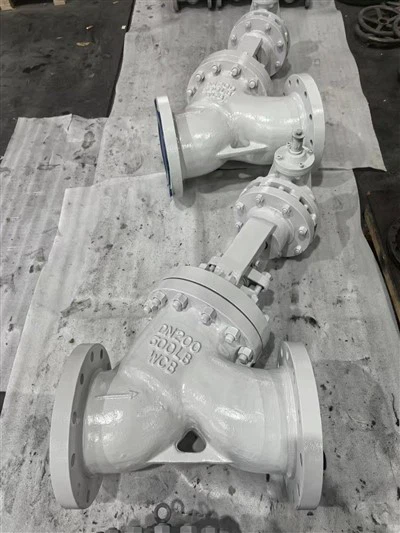
Forging process has a significant impact on the strength and sealing performance of valves by optimizing the internal structure of metals, enhancing material density and controlling processing accuracy. The following is the specific analysis:
I. Impact on Valve Strength
Grain refinement and mechanical property improvement
Dynamic recrystallization: During the forging process, metals undergo plastic deformation at high temperatures, and the original coarse grains are broken and re-crystallized into fine equiaxed grains. For instance, after forging, the grain size of carbon steel valves can be refined from ASTM grade 6 to grade 8-10, the tensile strength can be increased by 15% to 20%, and the yield strength can be raised by 10% to 15%.
Dislocation strengthening: Dislocations generated by deformation entangle with each other, forming a dislocation wall that hinders dislocation movement, thereby enhancing the hardness of the material. For instance, the hardness of stainless steel valves can increase by 2-3HRC after forging, and their wear resistance is significantly enhanced.
Density optimization and defect elimination
Porosity and porosity closure: The three-directional compressive stress during forging compacts internal defects such as porosity and porosity in the metal, increasing its density. For instance, the porosity of as-cast valves can reach 3% to 5%, while it drops below 0.5% after forging, and the fatigue resistance is enhanced by 30% to 50%.
Inclusion fragmentation and uniform distribution: Forging elongates or breaks non-metallic inclusions (such as sulfides and oxides) along the deformation direction, reducing the sources of stress concentration. For instance, the size of inclusions in forged valves can be controlled at ≤10μm, and the crack initiation threshold can be increased by more than twice.
Residual stress control
Reasonable forging ratio design: By controlling the forging ratio (the ratio of deformation to the original cross-sectional area), the distribution of residual stress can be optimized. For instance, when the forging ratio is 3:1, the residual compressive stress on the valve surface can reach -50 mpa, effectively suppressing the propagation of fatigue cracks.
Subsequent heat treatment synergy: Stress relief annealing is carried out after forging (such as holding at 550℃ for 2 hours), which can eliminate over 80% of residual stress and prevent stress corrosion cracking.
II. Impact on the Sealing Performance of Valves
Improvement of processing accuracy
Streamlined surface formation: Forging causes metal fibers to be continuously distributed along the contour, forming a streamlined surface and reducing the roughness of the sealing surface. For instance, the roughness of the sealing surface of forged valve seats can reach Ra0.4μm, which is 8 times lower than that of castings (Ra3.2μm), and the leakage rate is reduced by over 90%.
Enhanced dimensional stability: The dimensional change rate of forged valves after heat treatment is ≤0.1%, while that of castings can reach 0.5%-1%, ensuring precise control of the fit clearance of the sealing pair (such as ±0.05mm).
The uniformity of the material has been improved
Chemical composition homogenization: Forging promotes the diffusion of solute elements and eliminates casting segregation. For instance, the distribution deviation of Cr and Mo elements in forged nickel-based alloy valves is ≤1%, while in castings it can reach 5%-10%, significantly enhancing the corrosion resistance and sealing performance.
Phase structure consistency: Forging ensures uniform distribution of phase structures such as austenite and ferrite, preventing deformation of the sealing surface caused by local phase transformation. For instance, forged duplex stainless steel valves have stable sealing performance within the temperature range of -50℃ to 300℃, while castings may leak due to phase transformation.
Optimization of sealing structure compatibility
Preload control: Forged valves can ensure uniform distribution of sealing preload by precisely controlling the position and depth of bolt holes. For instance, the positional accuracy error of the bolt holes in forged flange valves is ≤0.1mm, which is five times higher than that of castings (≤0.5mm), and the sealing reliability is enhanced.
Elastic deformation compensation: Forged materials have a high elastic modulus (such as carbon steel up to 200GPa), and the deformation of the sealing surface is small when the pressure fluctuates, maintaining a stable sealing contact pressure. For instance, the deformation of the sealing surface of a forged stop valve at a pressure of 10MPa is no more than 0.02mm, while that of a cast part can reach 0.1mm.

III. Cases of Correlation between Process Parameters and Performance
Forging temperature control
High-temperature forging (1200-1250℃) : It is suitable for low-carbon steel valves and can obtain a fully recrystallized structure, with increased strength but reduced plasticity. Subsequent normalizing treatment is required to restore toughness.
Medium-temperature forging (950-1100℃) : Suitable for stainless steel valves, it avoids grain coarsening while retaining some deformation strengthening effects, and the hardness of the sealing surface can reach HRC28-32.
Forging ratio optimization
Small forging ratio (2:1) : It is suitable for simple-shaped valves (such as gate valve bodies), with low cost but limited strength improvement.
High forging ratio (5:1) : Suitable for high-pressure valves (such as stop valve discs), with strength increased by more than 30%, but the final forging temperature needs to be controlled to prevent cracking.
Heat treatment synergy
Quenching + tempering: After forging, quenching at 950℃ and tempering at 650℃ can make the hardness of the valve body reach HRC35-40 and the hardness of the sealing surface reach HRC50-55, taking into account both strength and wear resistance.
Solution treatment: Forged nickel-based alloy valves that undergo solution treatment at 1080℃ can eliminate σ phase and enhance corrosion resistance and sealing performance by two times.
Iv. Suggestions for Industry Applications
High-pressure valves: Forging process is preferred, such as API 6A standard forged gate valves, which can withstand a pressure of more than 70MPa and have a sealing grade of ANSI Class 600.
Low-temperature valves: Forged + deep cryogenic treatment (such as quenching in liquid nitrogen at -196℃) is adopted to prevent brittle fracture at low temperatures, and the sealing performance remains stable within the range of -196℃ to 816℃.
Corrosive medium valves: Forged Hastelloy alloy valves (such as C-276), combined with surface nitriding treatment, enhance the corrosion resistance of the sealing surface by 10 times, suitable for working conditions with concentrated sulfuric acid, hydrochloric acid, etc.