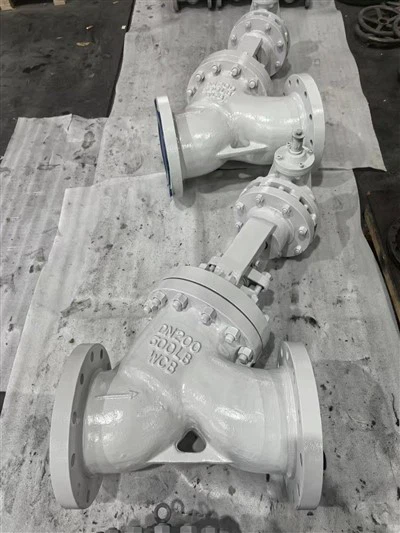
Features and Differences between Wedge Gate Valves and Slab Gate Valves
Wedge gate valves and slab gate valves have obvious differences in structure design, sealing mechanism, application scenarios and operation characteristics. Specific characteristics and differences are as follows:

I.Differences in structural design
Gate Shape
Cuneiform gate valve: The gate sealing surface is cuneiform and forms an angle of 2° 52 'to 10' 'from the center line of the gate. The stem pushes the gate down, utilizing wedge angle to achieve positive sealing.
Slab gate valve: Plate gate valve has a sealing surface parallel to the centerline and has two structures: single disc and double disc. Single disc valve relies on dielectric pressure to push the floating door or seat closed; double disc valve uses an interdisc spring or a tensioning mechanism to supplement the pressure.
Valve Stem and Actuation Method
Wedge gate valve: The stem has high driving torque and requires wedge angle to produce a sealing pressure. Rising stem design makes it easy to observe valve stem position and hiding stem design saves space.
Plate gate valve: the opening and closing torque is only half that of traditional gate valve, making operation more convenient. The upper portion of the stem is usually protected from dust and rainwater corrosion and has an opening indicator.
II. Sealing Mechanism Comparison
Wedge Gate Valve
Forced Seal: Stem thrust forces the wedge disc against the valve seat, forming a single-sided forced seal. Suitable for high and low pressure media, but hot expansion of valve stem in low temperature may overload the sealing surface.
Sealed cover material: Stainless steel and carbide have high abrasion resistance, but wedge angle requires high machining precision and difficult maintenance.
Slab Gate Valve
Self-Sealing and Media-Sealing: Seat with O-ring and a preloaded floating structure. Dielectric pressure pushes the gate disc into the valve seat, forming a two-a bidirectional seal. Metal to metal sealed valves can be injected with grease to assist in sealing and achieve zero leakage.
Seal surface protection: The gate disc with the guide hole is always aligned with the sealing surface when fully opened or closed, preventing direct impact of media and extending service life. III. Application Scenario Differentiation
Application Wedge Gate Valve
High-pressure medium: Wedge-shaped design designed to withstand high pressure and suitable for bolted bonnet steel gate valves used in the oil and gas industry (GB/T12234-2019 standard).
High-Temperature Environments: The elastic wedge gate disc compensates, suitable for high temperature and high pressure working conditions.
Space-Constrained Applications: Hidden stem structure reduces mounting height and is suitable for confined space.
Slab Gate Valve Applications
Clean fluid: The fluid flow resistance coefficient is extremely low and the channel is a smooth line when fully opened. Suitable for conveying natural gas, light oil and other clean media pipeline.
Medium containing suspended particles: Gate disc stays in contact with the seat cover to prevent particles from entering the cover. Suitable for oil transportation and Christmas tree valve applications.
All-weather requirements: The fully enclosed structure provides excellent protection and adapts to harsh environments.
IV. INTRODUCTION Operation and Maintenance Characteristics
Wedge Gate Valve
Long opening and closing time: gate disc travel, opening and closing requires screws.
Temperature Differences: A Temperature rise during closing may cause the stem to swell, causing the gate disc to become stuck. Packaging and sealing: Packaging and gate seals are usually without grease, depending on the self-sealing properties of the material.
Slab Gate Valve
Convenient opening and closing: self-sealing packing structure does not require frequent adjustment, stuffing box has auxiliary grease injection mechanism, flexible operation.
Safety Design: High pressure is automatically released from the inner cavity during closing to prevent overpressure damage.
Convenient maintenance: can replace seals and gates and other consumables, will not affect pipeline operation.